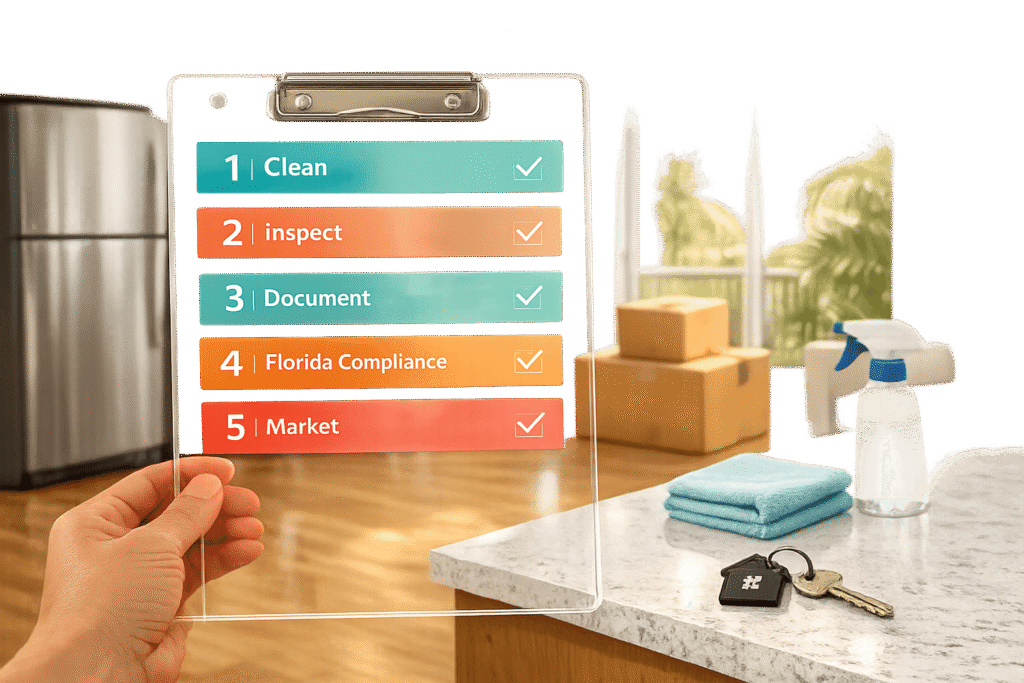
Preparing a rental property for new tenants is about more than just making it look nice – it ensures compliance with the law, protects your income, and helps attract reliable tenants. Here’s a quick breakdown of what you need to do:
- Clean and Repair: Deep clean every room, fix minor issues, and ensure appliances, plumbing, and HVAC systems are working. Don’t forget the exterior – mow the lawn, clean gutters, and inspect the roof.
- Safety Inspections: Test smoke detectors, check locks, and ensure the property meets Florida’s habitability standards, including structural and electrical safety.
- Set Up Utilities and Documents: Transfer utilities before move-in day, provide a welcome packet with key info, and include a move-in checklist.
- Legal Compliance: Adhere to Florida and Jacksonville-specific rental laws, including habitability requirements, flood disclosures, and updated notice periods.
- Market the Property: Improve curb appeal, stage the interior, and set a competitive rent based on local market rates.
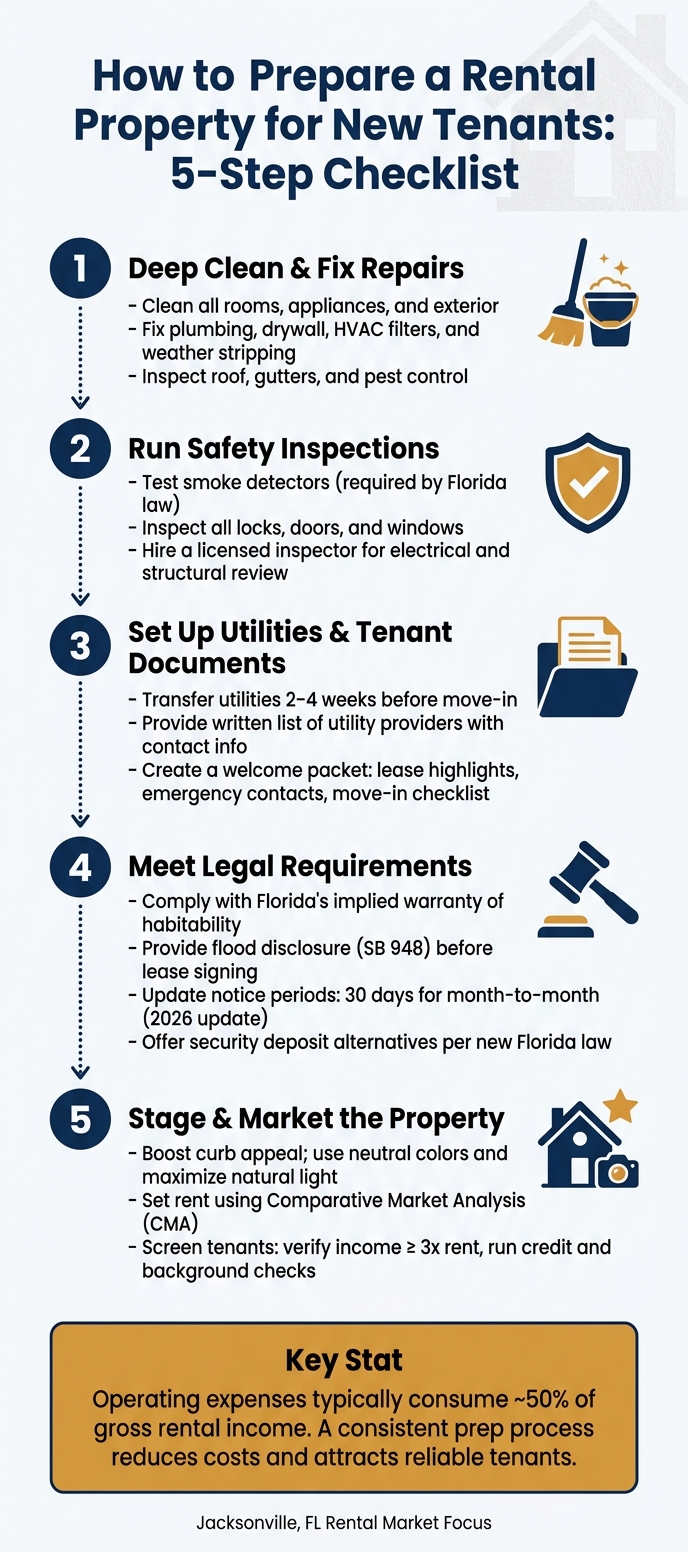
How to Prepare a Rental Property for New Tenants: 5-Step Checklist
Step 1: Deep Clean and Fix Repairs
Vacant properties can quickly gather dust, odors, and reveal minor issues during a walkthrough. That’s why a detailed cleaning and repair process is so important.
Build a Cleaning Checklist
Go through each room carefully to spot overlooked problems like loose towel racks, wobbly banisters, or scuffed baseboards. In the kitchen, move large appliances to clean underneath and behind them, degrease the oven, and remove lime buildup from faucets. Bathrooms need extra care – scrub toilets, sinks, and tubs, and clear mineral deposits from showerheads. For floors, deep clean or replace carpets, repair cracked tiles, and steam-clean hardwood.
Don’t forget the exterior. Mow the lawn, pull weeds, wash windows, and inspect the roof and gutters for damage or debris.
Once your cleaning checklist is complete, move on to necessary repairs.
Handle Common Repairs
After cleaning, check that all systems are in working order. Test drains for clogs, check under sinks for leaks, and flush the water heater to clear out sediment. According to statistics, household leaks waste billions of gallons of water each year. For walls and surfaces, patch any drywall holes, touch up paint, and replace worn weather stripping around doors and windows. Swap out the HVAC filter and schedule an inspection if needed. It’s also smart to arrange a pest inspection between tenants since moving in and out can sometimes attract unwanted critters.
Here’s a quick breakdown of tasks to complete before handing over the keys:
| Category | Tasks to Complete |
|---|---|
| Appliances | Clean behind and under units, degrease stove, check garbage disposal |
| Plumbing | Unclog drains, flush water heater, check for leaks under sinks |
| Walls & Floors | Patch drywall holes, touch up paint, deep clean or replace carpets |
| Exterior | Mow lawn, remove weeds, inspect roof and gutters, repair screen doors |
| HVAC & Weatherproofing | Replace air filters, replace worn weather stripping, schedule annual inspection |
Note: While Florida state law doesn’t require air conditioning, some local ordinances may insist that landlords maintain cooling systems in livable spaces. For example, Jacksonville’s habitability standards may include functional HVAC systems. Double-check to ensure your property complies before move-in day.
sbb-itb-73b3b1a
Step 2: Run Safety Inspections
Once cleaning and repairs are complete, the next step is to ensure your property is safe and ready for new tenants. As the Florida Bar highlights:
“The landlord is required to rent a dwelling that is fit to be lived in. It must have working plumbing, hot water and heating, be structurally sound and have reasonable security, including working and locking doors and windows.” – Florida Bar
Florida law requires landlords to comply with local health, building, and safety codes, regardless of lease terms. Following these steps will help you meet legal standards and provide a secure environment for tenants.
Test Safety Devices
Start by testing smoke detectors. Florida law requires all single-family homes and duplexes to have functioning smoke detectors. In Jacksonville, these devices must also meet Chapter 518 safety codes. Replace batteries as needed and check the device’s manufacture date to confirm it’s still within its recommended lifespan.
After that, inspect entry points. Make sure all doors, windows, and locks are in good working order. Faulty locks or unsecured windows do not meet the required security standards.
With safety devices checked, move on to assessing the property’s electrical and structural safety.
Check Electrical and Structural Safety
Jacksonville properties often face issues like roof damage, outdated electrical systems, and plumbing problems. Austin Candler of Candler Inspections notes, “Common issues that inspectors often find in Jacksonville properties… can include roof damage due to storms, outdated electrical systems, and plumbing problems.”. These problems may not be obvious during a quick walkthrough, so hiring a state-licensed home inspector is crucial.
Before the inspection, make sure utilities are active, replace any burnt-out light bulbs, and clear out attics and crawl spaces to allow a thorough review. Being present during the inspection gives you the chance to ask questions and gain a better understanding of your property’s condition.
Lastly, check structural elements like handrails, stairs, and flooring for any loose or uneven areas. Florida law requires that the property be structurally sound to ensure tenant safety.
Step 3: Set Up Utilities and Tenant Documents
With safety inspections out of the way, the next step is to ensure utilities are ready to go and your new tenant has everything they need from day one. This helps create a smooth transition from preparing the property to keeping your tenant happy.
Transfer and Test Utilities
Start the process of transferring utilities about 2–4 weeks before the tenant’s move-in date to avoid any last-minute issues. Schedule the activation of services for the day before their move-in. This way, you’ll have time to troubleshoot potential problems, like a tripped breaker or an internet connection that isn’t working. Be sure to take final meter readings on the day the previous tenant moves out and keep those records for accurate billing.
Provide your new tenant with a written list of utility providers, including electricity, water, gas, waste removal, and internet. Include account numbers and contact details for each service. Tenants usually need a driver’s license, a signed lease, and a service application to set up their accounts. If the property is part of a homeowner’s association (HOA), confirm which utilities are covered by HOA fees to avoid double billing.
Put Together a Welcome Packet
A well-thought-out welcome packet can make a great first impression.
The packet should include key details like lease highlights, maintenance procedures, emergency contacts, and a move-in inspection checklist. That checklist is especially important – it helps prevent misunderstandings if there’s ever a dispute about the security deposit.
For properties in Jacksonville, add Florida-specific information, such as how to operate hurricane shutters, HVAC filter replacement schedules (important in humid conditions), and mold prevention tips. Simple suggestions like using moisture absorbers (e.g., DampRid) in closets and ensuring proper ventilation during humid months can go a long way. These details not only show you’ve planned ahead but also cut down on the number of questions tenants might have after moving in.
Lastly, remind tenants in writing that the signed lease agreement is the primary document, and the welcome packet is just a helpful guide, not a replacement.
Step 4: Meet Jacksonville and Florida Legal Requirements
Once tenant documents and utilities are squared away, it’s time to ensure your property complies with Jacksonville and Florida legal standards.
Check Habitability and Lease Standards
Florida law includes an implied warranty of habitability for all rentals, even if your lease doesn’t mention it. This means you’re required to provide essential features like working heat, hot water, secure locks, and functional window screens from the moment tenants move in. Keep in mind, window screens must be repaired at least once a year, so it’s a good idea to document their condition during every walkthrough. These standards aren’t optional in Jacksonville.
You’re also responsible for addressing infestations unless they result from tenant actions. If pest treatment requires tenants to temporarily vacate, you must reduce their rent for up to four days, provided you give them a 7-day written notice.
If a tenant reports a habitability issue in writing, you have 7 days to resolve it. Failure to address the issue allows the tenant to terminate the lease under Florida Statute § 83.56:
“If the landlord materially fails to comply… within 7 days after delivery of written notice by the tenant specifying the noncompliance… the tenant may terminate the rental agreement.” – Florida Statute § 83.56
Know the 2026 Rental Law Updates
Recent legislative updates for 2025–2026 bring new rules for Jacksonville landlords:
- Email Notices: Landlords and tenants can now agree in writing to use email for official notices, including eviction and security deposit claims. Make sure to include a lease addendum listing both parties’ designated email addresses.
- Flood Disclosures: Under SB 948, you must provide a written flood disclosure before the lease is signed if the property has a history of flood damage, insurance claims, or federal flood assistance. Failing to do so could allow tenants to terminate the lease and receive a prorated refund of prepaid rent if they experience substantial property loss.
- Month-to-Month Notice Extension: The minimum notice period for ending a month-to-month tenancy has increased from 15 days to 30 days. Update your property management processes accordingly.
- Security Deposit Alternatives: You can now offer tenants the option to pay a non-refundable monthly fee instead of a traditional one-time security deposit.
Additionally, HB 1417 has standardized security deposits, rental agreements, and notice requirements across the state, meaning these rules apply uniformly in Jacksonville.
Use a Legal Compliance Checklist
To avoid oversight, refer to this legal compliance checklist:
| Legal Requirement | What’s Required | Notes |
|---|---|---|
| Habitability | Safe, livable conditions at all times | Applies even if not stated in the lease |
| Heating | Functioning heat during winter | Required by state law |
| Hot Water & Plumbing | Running hot and cold water | Must be maintained throughout tenancy |
| Locks & Keys | Secure locks | Replace or rekey between tenants |
| Smoke Detectors | Installed and working at move-in | Required in single-family homes and duplexes |
| Window Screens | Installed at move-in, repaired annually | Landlord must document condition |
| Pest Control | Extermination of pests | Landlord’s duty unless tenant caused |
| Garbage Containers | Outdoor containers provided | Garbage removal service required |
| Flood Disclosure | Written disclosure before lease signing | Mandatory under SB 948 |
| Month-to-Month Notice | 30 days’ notice to terminate | Increased from 15 days in 2026 |
| Email Notice Consent | Written agreement required | Must list designated email addresses |
| Mold Issues | Investigate and remediate | Treated as a health and safety issue |
For landlords managing multiple properties in Jacksonville, keeping detailed records – both digital and physical – of all disclosures, inspections, and agreements is an excellent way to protect yourself from disputes or penalties.
Step 5: Stage and Market the Property
Once you’ve taken care of all the legal and operational requirements, it’s time to shift your focus to showcasing your property in the best possible way.
Improve Curb Appeal
First impressions matter, and they often start at the curb. Make sure your property’s exterior is clean, well-maintained, and inviting. This sets a positive tone before potential tenants even step inside. Indoors, zero in on key spaces like the kitchen, bathrooms, and primary bedroom – these are the areas tenants tend to evaluate most critically. Keep countertops and surfaces clear to create a sense of openness and make rooms feel larger. Stick to neutral wall colors, such as beige or gray, which appeal to a wider audience, and maximize natural light by opening all blinds and drapes.
Remove personal items entirely to help prospective tenants imagine themselves living in the space. As Extra Space Storage puts it:
“The fewer items on display, the more open a room looks.” – Extra Space Storage
Don’t overlook the importance of high-quality online photos, either. These images are often the first “viewing” of your property for potential renters.
Once your property is visually ready, the next step is setting a competitive rental price to attract the right tenants.
Set a Competitive Rent Price
Determining the right rent starts with a Comparative Market Analysis (CMA) to see how your property stacks up against similar rentals in Jacksonville. A well-prepared and attractive property often justifies a higher price, giving you an edge in the market. That said, location plays a huge role – rent can vary by as much as 30% to 50% depending on the neighborhood. For instance, desirable areas like Greenland or Forest Trails often command rents above $2,000 per month, while Woodland Acres averages closer to $1,100.
Here’s a snapshot of current rental rates in Jacksonville:
| Unit Size | Average Monthly Rent |
|---|---|
| Studio | $1,038 – $1,355 |
| 1-Bedroom | $1,300 – $1,382 |
| 2-Bedroom | $1,528 – $1,658 |
| 3-Bedroom | $1,883 – $2,043 |
| 4+ Bedroom | $2,561+ |
Seasonality also affects rental prices. Rates generally peak between May and August and tend to dip during the winter months. To ensure your rent is affordable for local tenants, consider the 30% rule: tenants should spend no more than 30% of their income on rent. For example, a 2-bedroom unit priced at $1,658 per month would require a household income of about $66,320 per year.
As David Park, a Housing Data Analyst, notes:
“Jacksonville’s rental market shows stable conditions, characteristic of a balanced supply-demand environment. At $1,658/month for a 2-bedroom, this affordable market offers predictability for budget planning.”
Screen Tenants the Right Way
Tenant screening is a critical step that can save you thousands of dollars in potential headaches. A single bad tenant could cost you anywhere from $3,500 to $10,000 in lost rent, legal fees, and repairs.
To stay consistent and avoid any potential Fair Housing Act issues, use the same standardized application for every applicant. Verify that the applicant’s gross monthly income is at least three times the rent amount. Conduct a credit check to spot any red flags, like collections or recent bankruptcies, and perform background and eviction checks. When reaching out to references, prioritize contacting previous landlords over current ones for more honest feedback.
Conclusion: Key Steps to Get Your Rental Property Ready
Preparing a rental property for new tenants sets the stage for long-term tenant satisfaction and protects your investment. Focus on five key steps: cleaning and repairs, safety inspections, utility setup and documentation, legal compliance, and staging – with attention to Jacksonville’s specific rental market needs. Each step ensures your property is ready for a smooth tenant transition while addressing both practical upkeep and local legal requirements.
It’s worth noting that operating expenses – like taxes, insurance, maintenance, and vacancies – typically take up about 50% of gross rental income. By following a consistent, repeatable process, you can reduce unnecessary costs and improve the tenant experience at the same time.
Consistency also plays a big role in lease compliance. A standardized approach helps avoid misunderstandings and ensures both landlords and tenants are on the same page. As Suncoast Property Management explains:
“Standardization creates a better experience for both owners and residents.”
For those looking to simplify the process, 1 Realty Management offers full-service solutions – covering everything from tenant screening strategies to ensuring legal requirements are met – so no detail slips through the cracks.
Whether you’re managing a single property or multiple units, these steps provide a straightforward system to follow whenever a rental turns over. A well-prepared property attracts dependable tenants, reduces the risk of disputes, and helps maintain its value over time.
FAQs
What should I do first between tenants?
When one tenant moves out, the first thing to do is a detailed inspection of the property. Start by reviewing the lease agreement to confirm the tenant’s responsibilities. Then, carefully check for any damages and document the unit’s current condition. This step helps you pinpoint repairs or cleaning tasks that need attention to prepare the space for the next tenant. Tackling these issues quickly not only ensures the property is move-in ready but also helps maintain its overall quality for future renters.
How do I prove the unit’s move-in condition?
Before a tenant moves in, it’s important to carefully inspect the property and document its condition. Start by creating a detailed written report or checklist that covers every aspect of the unit, from floors and walls to appliances and fixtures. To add extra clarity, take photos or videos as visual proof of the property’s state. This step not only protects both you and the tenant but also helps avoid conflicts over damage or security deposit issues down the line. Pay close attention to detail to ensure everything is clearly recorded.
When should I start transferring utilities?
After finishing up cleaning, repairs, and safety inspections, it’s a good idea to start transferring utilities. This way, everything will be up and running when tenants move in, ensuring a seamless transition. Plus, it helps you stay compliant with local rental regulations in Jacksonville, Florida.