
Dealing with problem tenants doesn’t have to mean going to court. Avoiding legal battles can save you thousands of dollars and months of stress. Here’s how you can manage tenant issues effectively:
- Court Costs Add Up: Evictions can cost $5,000–$15,000, including legal fees, lost rent, and turnover expenses.
- Faster Alternatives Exist: Options like “Cash for Keys” (offering $1,000–$2,000 for voluntary move-out) resolve disputes in as little as 3–14 days.
- Prevention is Key: Strong lease agreements, proper tenant screening, and move-in documentation reduce future conflicts.
- Communication Works: Clear, professional communication helps resolve disputes early and avoids escalation.
- Inspections Matter: Regular property checks (every 3–6 months) catch problems before they worsen.
- Mediation Over Litigation: Mediation and negotiation are cost-effective ways to settle disputes without stepping into a courtroom.
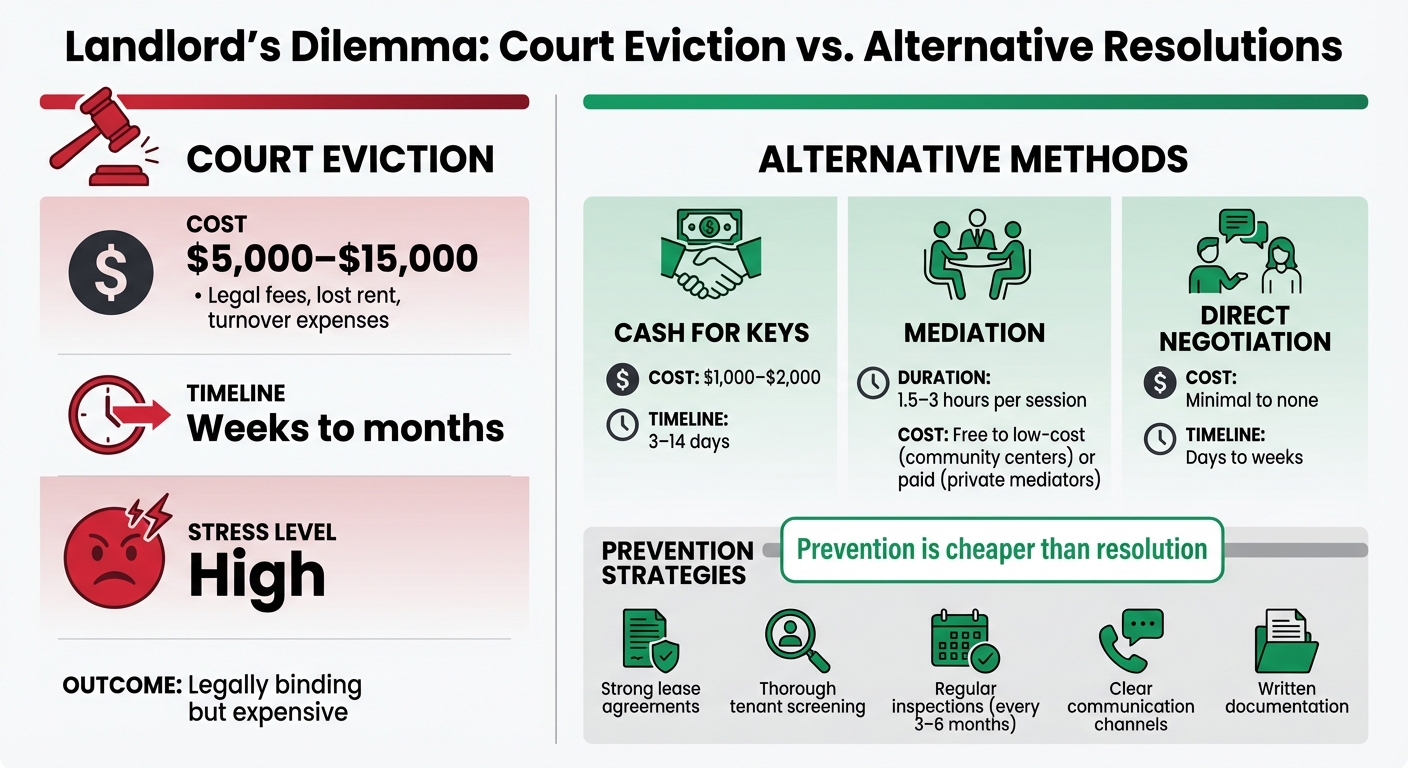
Court Eviction vs Alternative Resolution Methods: Cost and Timeline Comparison for Landlords
Creating Strong Lease Agreements From the Start
Avoid tenant issues by starting with clear lease agreements, thorough tenant screening, and proper move-in documentation. A well-crafted lease sets the tone for your landlord-tenant relationship, helping to prevent misunderstandings and disputes. When paired with careful screening and detailed property documentation, you can establish a solid foundation that minimizes potential conflicts.
Writing Detailed Lease Agreements
A lease agreement should go beyond just listing rent amounts and move-in dates. Including specific clauses can help you avoid common legal battles. For instance, explicitly prohibit payment methods like direct deposits, Venmo, PayPal, or cash. These methods can allow tenants to make partial payments, which may delay eviction processes in certain areas. Specify acceptable payment methods that keep you in control.
Add a joint and several liability clause, which makes all tenants collectively and individually responsible for the rent and any lease violations. This eliminates your involvement in roommate disputes. For late fees, consider daily charges instead of one-time penalties to encourage timely payments. Clarify that any payments received will first cover late fees before being applied to rent. This prevents tenants from bypassing late fees while paying just enough rent to avoid eviction.
“If you’re a serious real estate investor, the question is not IF you will ever get sued but rather when.” – Scott Smith, Royal Legal Solutions
Be specific about pet policies. Identify pets by breed, weight, and name, and define what qualifies as a pet (yes, even fish!) to address potential risks like flooding. Require renters insurance to cover personal property losses, reducing your liability for damages outside your control. Prohibit home-based businesses without prior approval to avoid zoning violations, neighbor complaints, or excessive wear and tear.
For Jacksonville landlords, Florida law includes specific disclosure requirements. Starting October 1, 2025, you’ll need to provide a written flood disclosure for leases of one year or longer. Additionally, security deposits must be held in a Florida banking institution, with written notice to tenants about the account details within 30 days of receipt. Under Florida Statute §83.505, official notices can only be sent via email if both parties have signed an agreement allowing this and provided valid email addresses.
How to Screen Tenants Properly
Proper screening is critical to reduce risks. Use credit reports, background checks, and employment verification to evaluate applicants. Always contact previous landlords – especially those prior to the current one – since the current landlord might be eager to offload a problematic tenant. Ask about payment history, property care, and whether they’d rent to the person again.
If the applicant is a member of the U.S. Armed Forces, you must notify them of your decision – approval or denial – within seven days of receiving their application.
Document your screening criteria and apply them consistently to every applicant. This approach not only protects you from discrimination claims but also ensures you’re making decisions based on objective factors like income-to-rent ratios, credit scores, and rental history. With a strong lease and carefully vetted tenants, you’re already reducing your chances of future disputes.
Documenting Property Condition at Move-In
Before move-in, conduct a detailed property inspection with your tenant. Use a comprehensive checklist that breaks down each room and specific features like walls, flooring, and appliances. Capture clear photos and videos, especially of any pre-existing damage, so tenants aren’t unfairly blamed later. Perform this inspection when the unit is empty to ensure nothing is hidden by furniture or belongings.
Eighteen states require landlords to provide or complete a move-in checklist, including Arizona, Georgia, Maryland, Michigan, and Washington. Even if not required in your state, this documentation is invaluable. Both you and the tenant should sign and date the checklist to confirm the property’s condition.
“Include your tenant in the move-in/move-out inspection process to avoid disputes about unfair charges.” – Apartments.com
During the inspection, test key systems like HVAC, plumbing, electrical outlets, and smoke detectors. Use simple abbreviations (e.g., NR for Needs Repair, NC for Needs Cleaning) to save time. Allow tenants a set period to report any issues they might notice after moving in. Keep these records stored digitally so they’re easy to access during move-out inspections, helping to avoid disputes over security deposits.
sbb-itb-73b3b1a
Using Communication to Stop Problems Before They Start
Clear communication can prevent small issues from turning into major headaches. When tenants know how to contact you and feel comfortable doing so, they’re more likely to report problems early – before a dripping faucet leads to water damage or a minor noise complaint escalates unnecessarily. The trick is to be accessible while maintaining professional boundaries. This sets the stage for consistent and effective communication.
Setting Up Ways for Tenants to Reach You
Make your communication methods clear from the start. During lease signing, provide a dedicated business phone number and email address exclusively for property-related matters. This keeps things professional and ensures you can manage messages during business hours. A welcome packet is also a great tool – it can outline maintenance procedures, emergency contacts, payment options, and house rules.
Set expectations for response times: emergencies should be addressed within 1 hour, urgent issues within 24 hours, and routine requests within 48 hours. Following these timelines builds trust and reassures tenants that their concerns matter. To streamline communication, consider property management software or portals. These tools help centralize interactions and create an organized, searchable record of all messages and maintenance requests.
“If communicating with you is easy, your tenant will be more likely to report any problems or needs promptly.” – Rentec Direct
Getting Tenants to Report Problems Early
Tenants may hesitate to report issues if they fear being ignored or penalized. Responding with empathy and a clear plan can make all the difference. For instance, if a tenant reports a heating problem, acknowledge the inconvenience and provide a realistic update: “I’ve contacted the HVAC technician. They’re available Thursday between 2-4 p.m. I’ll send you a text when they’re 10 minutes away.”
In Florida, landlords must give 24 hours’ notice before entering a unit for repairs, and entry must occur between 7:30 a.m. and 8 p.m.. Sharing these details upfront shows respect for tenant privacy and helps build a professional relationship. Additionally, Florida law protects tenants from retaliation for reporting code violations or exercising their rights. Creating a safe and open environment for reporting issues benefits everyone involved.
Keeping Written Records of All Conversations
Maintaining written records is essential for protecting both parties. Use email as your primary communication method, and follow up any phone calls or in-person meetings with a written summary to create a time-stamped record.
Reserve text messaging for quick updates, like notifying a tenant that a contractor is on the way. Texts aren’t ideal for more formal matters, as they’re harder to search and lack the necessary formality. Keeping written documentation ensures clarity on agreements, timelines, and expectations. It also provides critical evidence in case of disputes, whether for insurance claims or legal proceedings. By having everything in writing, you can avoid misunderstandings and resolve issues more effectively.
Using Regular Inspections to Catch Problems Early
Conducting inspections every three to six months helps identify minor issues, lease violations, unauthorized occupants, and property damage before they turn into bigger problems. These checks work hand-in-hand with your move-in documentation and communication efforts, ensuring both legal compliance and early problem detection.
Following Florida Laws for Property Inspections
In Florida, landlords have the right to inspect their rental properties, but they must follow specific legal guidelines. According to Florida Statute §83.53, landlords are required to give tenants at least 12 hours’ notice before entering the property for inspections or repairs. However, exceptions are made for emergencies, such as active water or gas leaks, where immediate access is allowed.
| Entry Scenario | Notice Required | Permitted Hours |
|---|---|---|
| Routine Inspection | 12 hours minimum | 7:30 a.m. – 8:00 p.m. |
| Necessary Repairs | At least 12 hours | 7:30 a.m. – 8:00 p.m. |
| Emergency | None required | Any time |
| Protection of Premises | None required | Any time |
To set clear expectations, consider including an inspection schedule in the lease agreement from the start. Additionally, exterior “drive-by” checks – like reviewing the roof, landscaping, or siding – can be performed without entering the property or notifying tenants. Once you’ve established legal entry procedures, focus on identifying lease violations and signs of property damage during these inspections.
Spotting Lease Violations and Property Damage
When paired with solid lease agreements and open communication with tenants, regular inspections strengthen your overall property management approach. During inspections, pay close attention to the property’s condition and whether tenants are adhering to lease terms. Watch for signs like unauthorized pets, smoking in non-smoking units, water leaks, mold, or unapproved occupants. Compare photos taken during the inspection with your move-in records to pinpoint any damage beyond normal wear and tear. Inviting tenants to join the inspection can create a cooperative environment, and if you spot a violation, citing the specific lease clause can help keep the conversation professional. Catching these issues early can prevent disputes from escalating into legal battles.
Recording What You Find During Inspections
Use a standardized digital checklist to document your findings, along with time-stamped photos stored securely in the cloud. Focus on key areas like walls, floors, appliances, plumbing, and electrical systems, while avoiding tenant personal items. These detailed records allow you to easily compare move-in and move-out conditions. After the inspection, leave a written note for the tenant summarizing the visit and its purpose. If you discover a violation, issue a written “Seven Day Notice” so the tenant has a chance to resolve the issue. Keeping thorough documentation ensures you have a strong evidence trail to address problems without resorting to legal action.
Ways to Resolve Disputes Without Lawsuits
When tenant issues arise following inspections, resolving them outside the courtroom can save both time and money. Mediation, direct negotiation, and legal consultations are effective methods to handle most landlord-tenant conflicts.
Using Mediators to Resolve Conflicts
Mediation is a practical option for disputes like security deposits, habitability concerns, and lease violations. However, it’s unsuitable for situations involving domestic violence, criminal behavior, or emergencies requiring immediate action. This voluntary process requires both parties to agree to participate and can be arranged through community centers, housing court programs, or private mediation services.
The mediator’s role is to guide discussions without making binding decisions. As lawyer Fred Miller explains:
“The mediator isn’t there to take sides. Their job is to guide the conversation, clarify misunderstandings, and help both parties find common ground”.
A typical session lasts 1.5 to 3 hours. To prepare, gather all relevant documents, such as the lease, payment histories, maintenance logs, and correspondence. Write down your key points and desired outcomes but remain open to compromise. During the session, give your tenant a chance to share their perspective uninterrupted – this can help reduce tension and foster cooperation.
If an agreement is reached, document the terms immediately. The party drafting the document often has more control over the specific wording. Many community centers and housing courts provide free or low-cost mediation services, while private mediators, such as those with the American Arbitration Association, charge fees. Should mediation fail, both parties retain the right to escalate the matter to small claims or housing court.
If mediation isn’t an option, direct negotiation with your tenant may be the next step.
Negotiating Directly With Your Tenant
Direct negotiation is often quicker and less expensive than formal mediation. Start by clarifying your goals, acceptable compromises, and non-negotiables. Choose a neutral, quiet location for the discussion.
Focus on the underlying concerns rather than rigid positions. For instance, a tenant’s repair complaint might stem from concerns about safety or health rather than the broken item itself. Allow your tenant to fully explain their side without interruption – this can help defuse emotions and make them feel heard. Summarize their concerns to demonstrate understanding and avoid repeating points.
If applicable, share relevant state or local codes that support your position. This shows you’re informed and prepared to defend your rights while maintaining a professional tone. Frame the conversation as a shared effort to solve a problem rather than a confrontation. As legal editors Marcia Stewart and Ann O’Connell note:
“The best settlements are often those in which both sides feel they’ve won, or at least have not given up anything fundamental”.
Document all verbal agreements immediately. Offer to draft the settlement yourself and include language specifying that the resolution fully satisfies the claim to prevent future disputes. Keep thorough records of all communications – these can be critical if the conflict escalates.
Getting Legal Advice Without Filing a Lawsuit
Well-organized records not only help during inspections but also prove invaluable when seeking legal advice. A lawyer can provide an objective assessment of your position and help avoid costly mistakes.
Consult an attorney to interpret specific state and local codes, particularly regarding the implied warranty of habitability, security deposit rules, and rent stabilization ordinances. Before terminating a tenancy, legal advice ensures you have valid grounds – such as nonpayment or lease violations – and the necessary documentation. This is especially crucial in areas with strict eviction protections.
An attorney can also help confirm that your actions won’t be seen as retaliatory. If you reach an agreement through negotiation or mediation, have a lawyer review it to ensure it’s legally binding and properly worded.
Before meeting with a lawyer, organize all relevant tenant records, including move-in checklists, repair requests, and conversation notes. As highlighted in Every Landlord’s Legal Guide:
“Rarely should lawyers and litigation be your first choice. Instead, you will usually want to consider alternatives that can give you better control over your time, energy, and money”.
Solving Specific Tenant Problems Without Court
You can often address tenant issues like late rent, security deposit disputes, and lease violations without resorting to legal action by using clear communication, thorough documentation, and negotiation.
Handling Late or Missing Rent Payments
Start with a polite reminder before the grace period ends. Many late payments happen because of simple oversights or technical issues. A quick phone call or email can often resolve the issue while maintaining a good landlord–tenant relationship.
If the rent remains unpaid after the grace period, send a formal Late Rent Notice. This creates a record of the missed payment and encourages the tenant to discuss a payment arrangement. It’s essential to understand why the payment is late. For example, a one-time emergency, like a car repair, differs from ongoing financial struggles. Knowing the cause can guide your next steps, such as offering a short-term payment plan.
If you decide to offer a payment plan, put it in writing. Include any late fees allowed by the lease. As legal editor Marcia Stewart points out:
“Good tenants are hard to find, and going through the process of terminating this tenant’s tenancy and trying to find a replacement will cost you a lot more than any expense you incur from getting rent a few days late.”
You might also recommend local rental assistance programs if appropriate. However, check local laws before accepting partial payments, as this could affect your legal options later. Keep detailed records of all communication and agreements in case missed payments become a recurring issue.
Settling Security Deposit Disagreements
Security deposit disputes are another common challenge, but thorough documentation can prevent most conflicts. Conduct detailed move-in and move-out inspections, and back them up with timestamped photos to create an objective record.
When making deductions from a security deposit, provide a written, itemized statement along with receipts or good-faith estimates for repairs. Clearly distinguish between normal wear and tear and actual damage. If a tenant disputes the deductions and sends a demand letter, respond promptly – typically within 14 days – and include all supporting documentation.
For small disputes, it may be more cost-effective to settle directly with the tenant rather than going to small claims court, where filing fees range from $30 to $100. As Rentable notes:
“The key is to decide if it is worth it to jump through hoops to settle the case in court or to personally settle with your tenant for a sum of money.”
Be mindful of your state’s deadlines for returning security deposits. These deadlines vary widely – from 14 days in Massachusetts and New York to 60 days in Arkansas. Missing the deadline can have serious consequences. For example, in states like California and New Jersey, failing to return the deposit on time may result in losing the right to withhold any portion of it. In Florida, Statute §83.49 limits remedies to the withheld amount plus court costs.
Responding to Lease Violations
Once rent issues and deposit disagreements are under control, address lease violations quickly to prevent them from escalating. Start by documenting the violation, reviewing the lease terms, and issuing a written notice. This notice gives the tenant a chance to fix the issue before further action is necessary – it’s not the same as an eviction.
For minor or first-time violations, such as noise complaints or lawn care issues, a written warning may be enough. This approach helps preserve the landlord–tenant relationship and avoids the high costs of turnover, which can range from $5,000 to $15,000 per eviction. In Florida, landlords must issue a 7-day Cure or Quit notice for general lease violations. If the same issue happens again within 12 months, they can issue a 7-day Unconditional Quit notice, which doesn’t allow for correction. For serious problems, like illegal activity, an Unconditional Quit notice is appropriate immediately.
Always document everything – photos, witness statements, and receipts can support your case if needed. If the tenant resolves the issue, follow up with written confirmation. Never attempt a “self-help” eviction by changing locks, cutting off utilities, or removing the tenant’s belongings. These actions are illegal and can result in significant liability.
Conclusion: Managing Tenant Relationships the Right Way
What Jacksonville Landlords Need to Remember
Dealing with problem tenants starts with having clear lease agreements, maintaining open communication, and keeping thorough documentation. Your lease should outline all rules and penalties upfront since retroactive penalties won’t hold up legally. Make sure every interaction – whether it’s a repair request, a conversation, or a violation notice – is documented in writing. As TG Property Management wisely states:
“If it’s not in writing, it didn’t happen.”
Consistency is key. Enforce lease terms uniformly to avoid potential discrimination claims. Take the time to listen to tenant concerns; many disputes can be resolved with a simple, honest conversation. For more complex situations, mediation is often a better route than taking legal action. Remember, evictions in Florida can stretch on for weeks and come with hefty costs. Alternative solutions, like negotiating directly or offering a “cash for keys” deal, can often save time and money while protecting your interests.
Preparing for Problems Before They Happen
Being proactive is your best defense against tenant issues. Start by thoroughly screening tenants and using leases reviewed by an attorney to cover a range of possible scenarios. Keep detailed records of everything: property inspections, maintenance requests, and tenant communications. Knowing Florida’s legal notice requirements is also crucial – for example, a Three-Day Notice for late rent (excluding weekends and holidays) or a Seven-Day Notice to Cure or Vacate for lease violations. Failing to follow these steps can result in your case being thrown out in court.
Organized systems make all the difference. Keep a log of all communications, conduct regular property inspections, and respond to tenant concerns promptly. These habits, paired with a solid understanding of Florida’s rental laws, will help you handle disputes efficiently – often without needing to step foot in a courtroom.
FAQs
When should I use “cash for keys”?
Dealing with problem tenants can be stressful, especially if you’re facing the prospect of a drawn-out legal battle. One alternative worth considering is the “cash for keys” approach. This method involves offering tenants a cash payment in exchange for them leaving the property voluntarily.
Why choose this route? For starters, it can save you significant time and money compared to going through formal eviction proceedings. Plus, it provides a way to reach an agreement that works for both you and the tenant. When both sides see it as a practical solution, it can make an otherwise difficult situation much easier to handle.
What records do I need if a dispute escalates?
If a conflict with a tenant intensifies, it’s crucial to keep detailed records of everything. This includes complaints, inspections, repairs, and any communication between you and the tenant. For disputes related to background check or eviction errors, ensure you carefully review the records and work through the appropriate channels to correct any inaccuracies. Maintaining thorough documentation not only strengthens your position but can also help resolve disagreements more efficiently – or prepare you for legal action if it comes to that.
How do I stay legal during inspections and notices in Florida?
In Florida, landlords must ensure that all notices are in writing and comply with state laws. For instance, landlords are required to provide proper written notice before entering a rental property for inspections or other purposes. Additionally, respecting tenants’ privacy is a legal obligation.
Keeping detailed records of notices and strictly following the state’s entry requirements can help landlords steer clear of potential legal troubles. Proper documentation not only demonstrates compliance but also protects both parties in case of disputes.