Understanding Florida’s security deposit laws is essential for landlords and tenants. These laws, outlined in Florida Statutes Section 83.49, standardize how deposits are handled, stored, and returned. Key points include:
- No cap on deposit amounts: Landlords can charge any amount, typically 1-2 months’ rent.
- Storage requirements: Deposits must be kept in a Florida-based account (interest-bearing or non-interest-bearing) or secured by a surety bond.
- Notification rules: Landlords must notify tenants in writing within 30 days about the deposit’s storage details.
- Deductions: Allowed for unpaid rent, damages beyond normal wear and tear, and lease violations. Routine maintenance and normal wear cannot be deducted.
- Return deadlines: Full refunds must be issued within 15 days. If deductions are claimed, landlords must send a certified notice within 30 days, and tenants have 15 days to object.
Failure to follow these rules can result in losing the right to withhold any part of the deposit and potential legal penalties. Professional property managers can help ensure compliance with Florida’s strict regulations.
Florida’s Security Deposit Rules Explained
Florida Statutes Section 83.49 lays out the guidelines for handling security deposits, covering how they should be collected, stored, and managed. Following these rules can help you avoid unnecessary legal troubles.
Does Florida Cap Security Deposit Amounts?
In Florida, there’s no legal cap on the amount landlords can charge for a security deposit. Instead, landlords determine the deposit amount based on factors like the property’s condition and market trends. Most landlords in the state typically charge between one and two months’ rent. However, setting the deposit too high could discourage potential renters, making effective tenant screening even more critical to finding the right fit.
Once you receive a security deposit, you’re required to provide tenants with a written disclosure about the account holding the deposit and whether it accrues interest. This must be done within 30 days of receiving the deposit. If you make any changes to the account, you must notify the tenant in writing within 30 days.
"YOUR RENTAL AGREEMENT REQUIRES PAYMENT OF CERTAIN DEPOSITS. THE LANDLORD MAY TRANSFER ADVANCE RENTS TO THE LANDLORD’S ACCOUNT AS THEY ARE DUE AND WITHOUT NOTICE. WHEN YOU MOVE OUT, YOU MUST GIVE THE LANDLORD YOUR NEW ADDRESS SO THAT THE LANDLORD CAN SEND YOU NOTICES REGARDING YOUR DEPOSIT." – Florida Statutes Section 83.49
It’s worth noting that landlords renting out fewer than five dwelling units are not subject to this 30-day notification rule.
Now, let’s break down how security deposits differ from nonrefundable fees, so you can ensure your rental agreements comply with Florida law.
Security Deposits vs. Nonrefundable Fees
Unlike security deposits, nonrefundable fees fall under Section 83.491 and are not subject to the same rules for storage or refunds. Florida law mandates that security deposits must be refundable, minus any lawful deductions, as specified in Statute 83.49.
Landlords in Florida can also offer tenants the option of paying a fee in lieu of a security deposit. This is a recurring monthly fee instead of the traditional upfront deposit. However, it’s important to understand that this fee is legally distinct from a security deposit:
"THIS FEE IS NOT A SECURITY DEPOSIT AND PAYMENT OF THE FEE DOES NOT ABSOLVE THE TENANT OF ANY OBLIGATIONS UNDER THE RENTAL AGREEMENT, INCLUDING THE OBLIGATION TO PAY RENT AS IT BECOMES DUE AND ANY COSTS AND DAMAGES BEYOND NORMAL WEAR AND TEAR WHICH THE TENANT OR HIS OR HER GUESTS MAY CAUSE." – Florida Statute 83.491
Additionally, landlords cannot base their rental approval decisions on whether a tenant chooses a fee-in-lieu option over a traditional deposit.
Here’s a quick comparison to clarify the differences:
| Feature | Security Deposit | Nonrefundable Fee |
|---|---|---|
| Refundability | Refundable (minus lawful deductions) | Generally nonrefundable |
| Governing statute | F.S. 83.49 | F.S. 83.491 |
| Storage rules apply? | Yes | No |
| Affects tenant obligations? | Covers lease performance | Does not reduce tenant obligations |
sbb-itb-73b3b1a
How to Store Security Deposits Legally in Florida
Once you’ve grasped the rules around security deposits and associated fees, the next step is knowing how to store these funds properly. Florida Statute 83.49 outlines three legal ways to hold a tenant’s security deposit. Using an incorrect method or failing to meet disclosure requirements could mean losing your right to claim the deposit.
Here’s a quick comparison of the three methods:
| Storage Method | Commingling Allowed? | Interest Requirements |
|---|---|---|
| Non-Interest-Bearing Account | No | None |
| Interest-Bearing Account | No | Tenant gets at least 75% of the interest or 5% simple interest annually |
| Surety Bond | Yes | Tenant is owed 5% simple interest annually |
Non-Interest-Bearing Accounts
With this option, the deposit must go into a separate, non-interest-bearing account at a financial institution located in Florida. It’s crucial to keep this account completely separate from any other funds you manage. Florida Statute 83.49 is very clear about this:
"The landlord shall not commingle such moneys with any other funds of the landlord or hypothecate, pledge, or in any other way make use of such moneys until such moneys are actually due the landlord." – Florida Statute 83.49
Since the account doesn’t earn interest, you’re not required to pay any to the tenant. However, you must notify the tenant in writing within 30 days of receiving their deposit. This notice should include the bank’s name, address, and confirmation that no interest will be paid. You can deliver this notice in person, by mail, or via email.
Interest-Bearing Accounts
If you prefer, you can place the deposit into a separate interest-bearing account at a Florida-based financial institution. In this case, you’re responsible for paying the tenant either 75% of the annualized average interest rate or 5% simple interest per year – whichever you choose. Payments to the tenant can either be made directly or credited toward their rent, but they must occur at least once a year.
As with non-interest-bearing accounts, you’re required to notify the tenant in writing within 30 days of receiving the deposit. This notice should specify the bank’s name, address, and confirm that the deposit is earning interest. If the account details change, you must also notify the tenant within 30 days.
Surety Bonds as an Option
For landlords seeking more flexibility, surety bonds offer an alternative. Unlike the other methods, this option allows you to keep the deposit funds in your general operating account. Instead of segregating the funds, you’ll post a bond with the Clerk of the Circuit Court in the county where the rental property is located. The bond must equal either the total deposits you hold or $50,000 – whichever amount is lower. This is a common consideration for investors involved in Westside property management who handle multiple units.
If you manage properties in five or more counties, you can post a single bond of up to $250,000 with the Florida Secretary of State. For those with a smaller portfolio, such as Southside property management clients, traditional bank accounts are often more practical. With surety bonds, you’re still required to pay the tenant 5% simple interest per year. Additionally, you must provide the tenant with a written notice within 30 days, stating that a bond has been posted with the court clerk.
What Landlords Can and Cannot Deduct from Security Deposits
Once you’ve collected a security deposit, it’s crucial to understand what deductions Florida law allows. Making improper deductions can lead to disputes or even losing the deposit entirely. If you’re unsure about deposit storage or lease requirements, check earlier sections for guidance.
Allowed Deductions
Florida law specifies what landlords can deduct from a tenant’s security deposit. These include unpaid rent, damages that go beyond regular wear and tear, and other direct losses caused by a lease violation. For instance:
- Holes in walls
- Broken windows
- Burn marks from smoking
- Excessive trash or grime
Other costs, like unpaid utilities, late fees, or re-leasing fees, can only be deducted if the lease clearly states that tenants are responsible for them. Make sure your lease explicitly assigns these costs to avoid disputes.
One important note: you cannot charge tenants the full replacement cost for items that have already depreciated. As the Law Offices of Heist, Weisse & Wolk, PLLC explain:
"A manager should not attempt to charge a resident for the full cost of carpet replacement, when the useful life of the carpet was already 90% exhausted prior to that resident taking occupancy."
Deductions That Are Not Allowed
On the flip side, some expenses are off-limits. Normal wear and tear – like faded paint, minor wall scuffs, or small nail holes from hanging pictures – cannot be deducted. Here are a few examples of prohibited deductions:
- Routine cleaning
- Loose doorknobs
- Replacing light bulbs
- Minor touch-ups
Additionally, landlords cannot deduct for preparing or mailing notices required by the lease. As noted by Heist, Weisse & Wolk:
"Any administrative charge for preparing the notice of claim against the security deposit or the certified mail postage on the notice of claim are the manager’s statutory duties and are not chargeable to the resident."
Capital improvements, like roof repairs or exterior painting, are also the landlord’s responsibility and cannot be deducted from the deposit.
Here’s a quick reference table for clarity:
| Allowed | Not Allowed |
|---|---|
| Unpaid rent | Faded paint or minor wall scuffs |
| Holes in walls or broken windows | Small nail holes from hanging pictures |
| Excessive trash or grime | Routine cleaning |
| Smoking damage (burn marks, odors) | Replacing light bulbs or minor touch-ups |
| Unpaid utilities (if stated in the lease) | Capital improvements (roof repairs, exterior painting) |
| Eviction court costs and attorney’s fees | Administrative fees for processing the deposit |
| Removal of unauthorized alterations | Damage from natural disasters (unless tenant negligence is proven) |
Lastly, Florida Statute § 413.08 prohibits charging pet deposits or fees for service animals or emotional support animals (ESAs). This rule applies even if your lease includes a no-pets policy.
How and When to Return Security Deposits in Florida
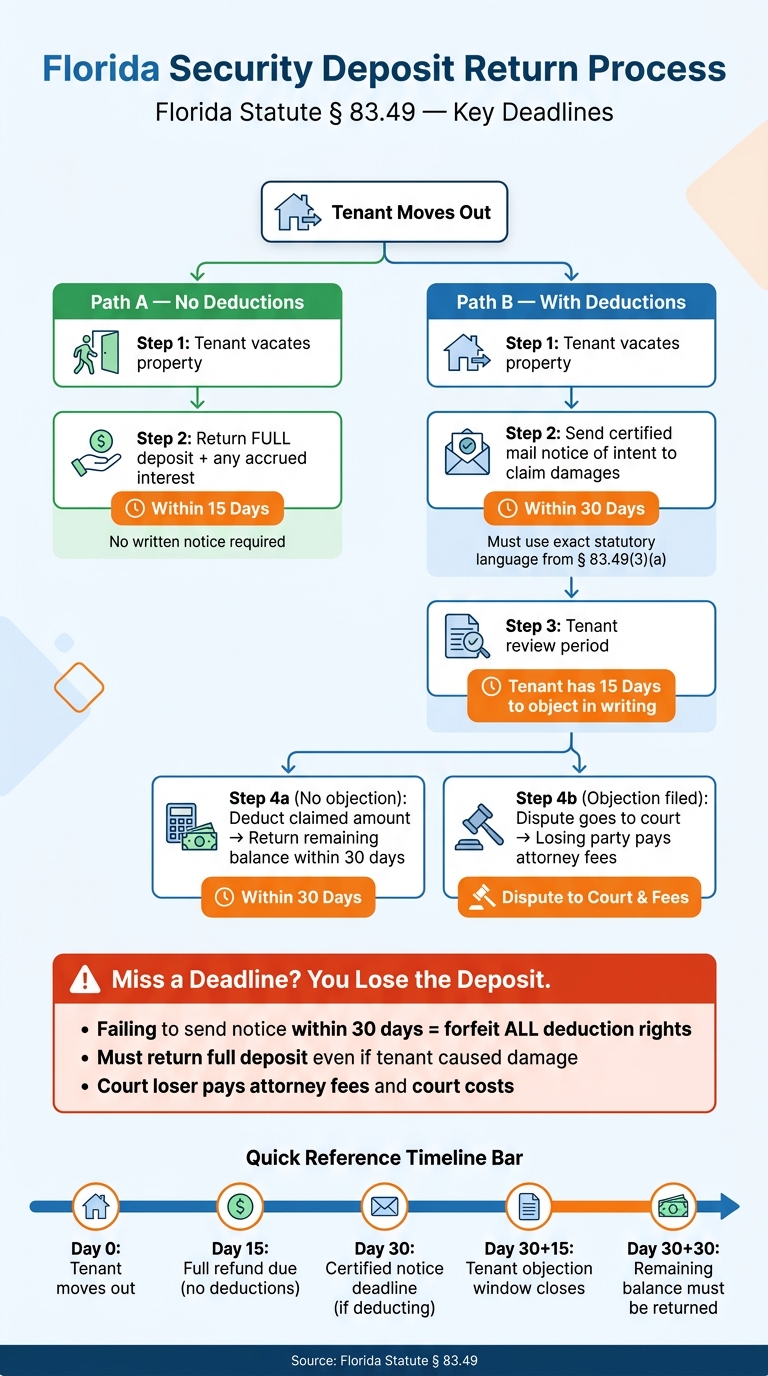
Florida Security Deposit Laws: Key Deadlines & Rules for Landlords
Once you’ve figured out how to handle and store security deposits, the next step is understanding Florida’s strict deadlines for returning them. Missing these deadlines can result in losing your right to withhold any part of the deposit, even if damages exist.
The 15-Day Deadline for Full Refunds
If you’re returning the entire deposit without any deductions, you must refund the full amount – including any accrued interest – within 15 days after the tenant moves out. No written notice is required in this case, and the clock starts ticking as soon as the tenant vacates the property.
The 30-Day Rule for Deductions
Planning to withhold part of the deposit for damages? Here’s what you need to do:
- Send a certified mail notice within 30 days of the tenant moving out.
- This notice must use the exact language required by Florida Statute § 83.49(3)(a):
"This is a notice of my intention to impose a claim for damages in the amount of ____ upon your security deposit, due to ____. It is sent to you as required by s. 83.49(3), Florida Statutes. You are hereby notified that you must object in writing to this deduction from your security deposit within 15 days from the time you receive this notice or I will be authorized to deduct my claim from your security deposit."
Once the tenant receives the notice, they have 15 days to object in writing. If no objection is made, you can deduct the claimed amount and must return any remaining balance within 30 days. This process ensures clear communication and fairness for both parties.
Consequences of Missing the Deadlines
Florida courts are strict about these timelines. As Commoner Law explains:
"Florida’s deposit regime is one of the most technically unforgiving in the country for landlords – but only if you use the procedural levers the statute puts in your hands."
Failing to send the required notice within 30 days means you lose the right to withhold any part of the deposit. Even if the tenant caused damage, you’ll still need to return the full deposit. While you can pursue separate legal action for damages, you won’t have the advantage of holding onto the deposit. If the dispute goes to court, the losing party is typically responsible for the other side’s attorney’s fees and court costs.
| Action | Deadline | Consequence of Missing It |
|---|---|---|
| Return full deposit (no deductions) | 15 days after move-out | Possible liability for legal action and costs |
| Send notice of intent to claim | 30 days after move-out | Lose the right to withhold any part of the deposit |
| Tenant’s objection period | 15 days after receiving notice | No objection allows the deduction to proceed |
Sticking to these deadlines protects your rights and reduces the risk of legal complications.
Common Security Deposit Mistakes Landlords Make
Even small mistakes in handling security deposits can lead to big legal troubles. Here are some common errors landlords make and how to sidestep them.
Not Providing Written Disclosures
Florida law mandates that landlords notify tenants in writing within 30 days of receiving a security deposit. This notice must include the deposit amount, the name and address of the bank holding the funds, and whether the account earns interest or is backed by a surety bond. A simple way to comply is to include this disclosure in the lease agreement.
"The landlord has 30 calendar days after receiving the security deposit to decide on how to retain it and to inform the tenant of this information." – Varnell and Warwick
Failing to provide these disclosures can result in courts requiring a full return of the deposit, along with attorney fees. This undermines the protections outlined in Florida Statute § 83.49.
Mixing Deposits with Personal or Business Funds
Florida law strictly prohibits mixing tenant deposits with personal or business accounts. According to § 83.49, landlords must keep these funds separate. If you can’t prove the deposit was segregated, you risk losing the right to retain any of it. The solution is simple: set up a dedicated bank account exclusively for security deposits.
Mishandling Deposits During Property Ownership Changes
When selling a rental property, security deposits must transfer to the new owner along with the tenants. The new owner has 30 days to move the deposits into a compliant Florida bank account and issue updated written disclosures to the tenants, detailing the account information. Failing to handle this properly can lead to legal consequences. To avoid issues, document all deposit amounts and account details during the ownership transfer, ensuring compliance with Florida Statute § 83.49.
How Professional Property Management Helps with Security Deposits
Handling security deposits isn’t as simple as it might seem. There are strict rules landlords must follow, and even small mistakes – like missing a deadline or using the wrong wording in a notice – can lead to losing the entire deposit and possibly racking up attorney fees. This is where a professional property management company, such as 1 Realty Management, can step in to make a real difference.
Deposit Storage and Record-Keeping
One of the first steps professional property managers take is setting up deposit accounts that comply with legal requirements. They don’t stop there – they also provide the necessary 30-day written notice to tenants and use digital, time-stamped reports to document the property’s condition during move-ins and move-outs. These practices create a solid system for keeping track of deadlines and ensuring everything is done by the book.
Meeting Deadlines and Staying Compliant
Beyond storing deposits properly, professional managers are vigilant about meeting legal deadlines. They carefully track the 15-day deadline for full refunds and the 30-day deadline for sending deduction notices. Each notice is crafted to include the exact statutory language required, leaving no room for error.
"Florida courts have consistently held that landlords who fail to follow the exact procedures of Section 83.49 lose their right to deductions." – Tellus Resource Guide
Lowering Landlord Liability
Mistakes in handling deposits can have costly consequences. Even small procedural errors can result in losing the right to deductions and facing hefty attorney fees. What’s worse, if a dispute arises, the prevailing party can claim attorney fees, which means the financial risks go far beyond the deposit itself.
"Strong documentation, strict attention to Florida deadlines, and a solid grasp of state rules will go a long way toward protecting your investments." – Noel Krasomil, iPropertyManagement
Conclusion: Following Florida’s Security Deposit Laws
Florida’s security deposit laws leave little room for mistakes. For example, failing to keep funds in a separate, Florida-based account violates state law. As outlined in Florida Statute 83.49:
"If the landlord fails to give the required written notice within the 30-day period, he or she forfeits the right to impose a claim upon the security deposit and may not seek a setoff against the deposit."
This makes it clear how crucial it is to follow every detail of the law. A single misstep – like sending a notice late, using incorrect wording, or mixing deposit funds with personal accounts – can escalate into a costly legal dispute. On top of that, the losing party in such cases may be required to cover court costs and reasonable attorney fees for the other side.
The good news? Staying compliant is manageable with the right systems in place. Steps like sending all notices via certified mail, maintaining deposits in a dedicated account, documenting property conditions during move-in and move-out, and including the required statutory language in your lease agreements are all critical. These practices help ensure you’re meeting the requirements of Florida Statute 83.49.
If all of this feels overwhelming, consider partnering with a professional property management company like 1 Realty Management. They can handle the nitty-gritty details – deposit storage, disclosures, tracking deadlines, and documentation – so you stay protected and in full compliance with Florida law.
FAQs
What counts as normal wear and tear in Florida?
Normal wear and tear in Florida refers to the natural aging or gradual deterioration of a property that happens over time with regular use. Examples include things like minor scratches on floors, loose hinges, moderate plumbing leaks, chipped or faded wall paint, normal grease buildup, carpet flattening or discoloration, and general dust or dirt. These issues are considered standard and typically aren’t the tenant’s responsibility to fix.
What if my landlord doesn’t send the deposit notice within 30 days?
If your landlord doesn’t send a deposit notice within 30 days, they could be breaking Florida law. Under this law, landlords must provide written notice within that period, outlining details like how your deposit is being held, the name and address of the financial institution, and whether it will accrue interest.
What should I do if I disagree with a security deposit deduction?
If you don’t agree with a security deposit deduction, it’s important to act quickly. Start by asking your landlord for a detailed, itemized list of the deductions. Then, gather and present any evidence – like photos or receipts – that supports your case against charges you believe are unfair. Make sure to keep copies of all your communications for reference.
If the issue isn’t resolved through direct communication, you can take the matter to small claims court. Be sure to act within the deadlines set by Florida law to ensure your rights are protected.