
Want to maximize rental income in Jacksonville? Timing is everything.
Jacksonville’s rental market doesn’t follow a single seasonal trend – it’s shaped by military relocations, school calendars, snowbirds, and even hurricane season. Here’s the key takeaway:
- Peak rental season: March–August. Demand is highest due to military PCS orders, family relocations, and local events. Listing during this window reduces vacancy and supports higher rents.
- Off-peak season: September–February. Demand slows due to hurricanes and holidays. Lower rents slightly or offer concessions like a free first month to stay competitive.
- Special cases: Beach properties attract snowbirds November–March, allowing for premium short-term leases.
Pro Tip: Align lease expirations with high-demand months (May–July) to avoid vacancies during slower periods. Pricing adjustments based on real-time market data will keep your property occupied year-round.
Let’s break down how to price, market, and plan for each season in Jacksonville’s rental market.
Jacksonville Rental Market: Seasonal Pricing Calendar for Landlords
Peak Season Pricing: March Through August
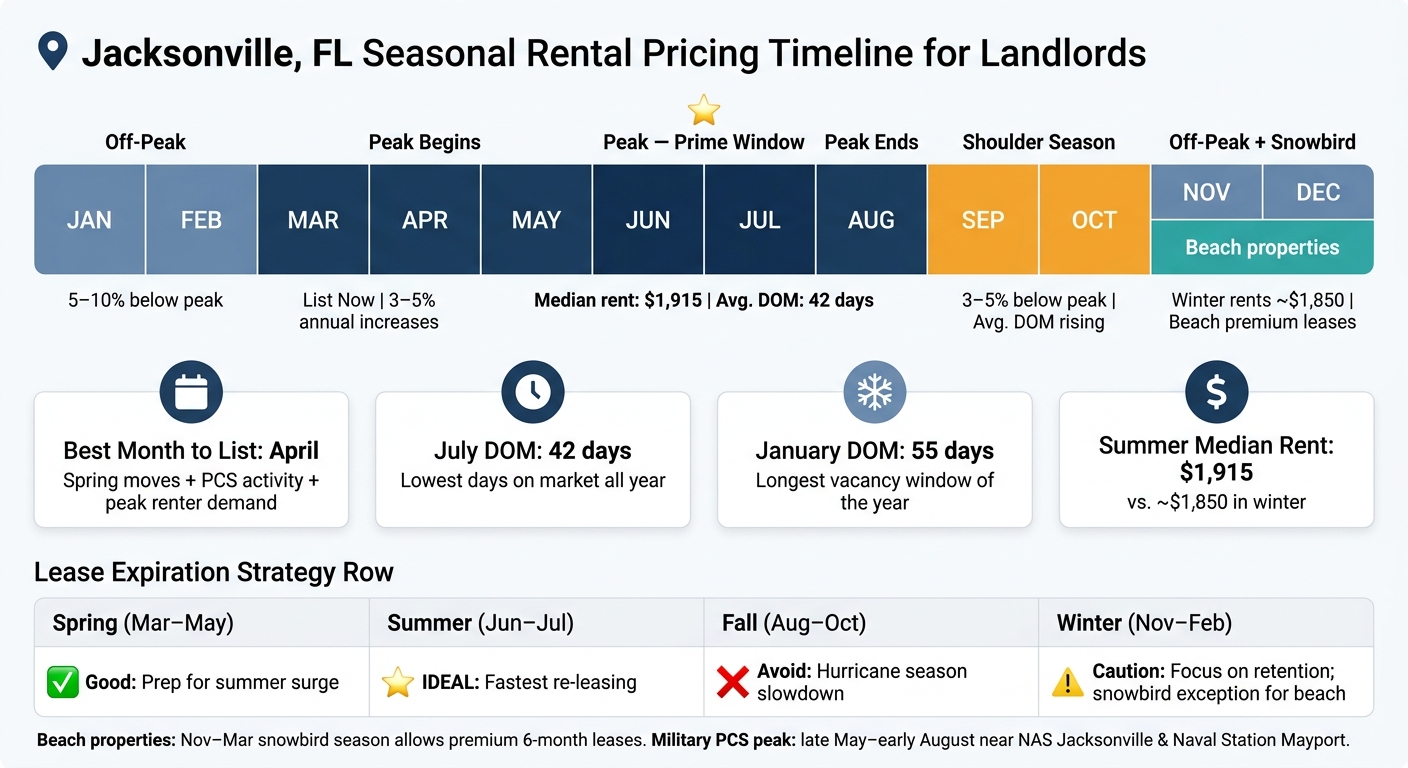
Jacksonville’s rental market heats up from March through August, with demand reaching its highest from early spring to mid-summer. The activity kicks off in March, fueled by local events that attract relocating professionals and spark long-term leasing interest in areas like South Jacksonville and Nocatee. By May, the pace picks up significantly, peaking in June and July. This period sees a convergence of military Permanent Change of Station (PCS) orders, student housing searches, and family relocations.
How to Spot High-Demand Rental Periods
Peak demand periods are marked by rapid inquiries and quick lease signings. During the summer surge, Jacksonville’s average Days on Market (DOM) drops to its lowest point of the year – just 42 days in July. Properties often receive multiple qualified applications within days of being listed, a clear indicator of high demand. If a rental remains vacant for more than 60 days during this time, the pricing may be too aggressive.
Key groups driving demand include military families, students, and relocating households. When all three are actively searching, May through early July becomes the prime window to list a property.
Setting Competitive Rent Prices During Peak Season
To set the right price during peak season, focus on actual rental data – not just the asking prices. Active listings can sometimes reflect inflated expectations, while recently closed leases provide a more accurate picture of what tenants are willing to pay. For example, in 2025, Jacksonville’s median rented price hit a high of $1,915 during the summer months, offering landlords a helpful benchmark.
Pricing also varies by neighborhood, so it’s essential to consider your property’s location. Here’s a snapshot of peak season trends across Jacksonville:
| Neighborhood | Peak Season Pricing Highlights |
|---|---|
| Jacksonville/Atlantic Beach | Premium rates; extremely high summer demand |
| Riverside/Avondale | High demand; renters expect updated interiors |
| Southside/Mandarin | Moderate-to-high demand; peaks before school starts |
| Ponte Vedra/Nocatee | Strong demand, especially in March |
Jacksonville landlords can typically implement 3–5% annual rent increases, and peak season provides the ideal opportunity to adjust rates. Competitive pricing paired with effective marketing ensures properties don’t sit vacant during this high-demand period.
Marketing Your Property During Peak Season
Once pricing is set, the next step is to market your property effectively to attract tenants quickly. Military families and relocating professionals often operate on tight timelines, so responding to inquiries within hours can make all the difference.
Professional photography is a must during peak season. High-quality, well-lit photos showcasing your property’s best features will help your listing stand out. Beyond visuals, highlight amenities that are particularly important to Jacksonville renters, such as central air conditioning (essential for Florida’s heat), in-unit washer/dryer, fenced yards, and garages. If your property is near a naval base, consider emphasizing pet-friendly policies and fast application processing to appeal to military families with tight deadlines.
If your property is vacant in April, don’t delay – list it immediately to capture the early wave of peak demand.
Off-Peak Season Pricing: September Through February
From September to February, Jacksonville’s rental market experiences a noticeable slowdown. Hurricane season (August through October) and the winter holidays contribute to this dip in activity. By January, the average days on market (DOM) stretch to 55 – the longest of the year. Median rents drop accordingly, sliding from a summer high of $1,975 to around $1,850 during the 2024 winter season.
That said, some demand remains steady. Military families relocating due to mid-year PCS orders, students from UNF and Jacksonville University preparing for their spring semester, and football fans seeking short-term housing near Downtown during the Jaguars’ season (September–January) all create leasing opportunities. Additionally, beach communities like Jacksonville Beach, Atlantic Beach, and Neptune Beach attract “snowbirds” – northern residents fleeing the cold – from November through March. These patterns offer a chance to adjust strategies and limit vacancy risks during slower months.
Reducing Vacancies During the Off-Peak Season
The best way to combat vacancies in the off-season? Keep your current tenants. Turnovers during slow months can be expensive – not just in terms of lost rent but also the extended time it might take to secure a new tenant when fewer renters are searching. If a reliable tenant wants to renew, make the process as seamless as possible.
For units that do turn over in fall or winter, offering flexible lease terms can be a game-changer. A 7- or 8-month lease starting in December, for example, aligns renewals with the busier March–August period, minimizing long-term vacancy risks.
Targeting the right renter profile is equally important. In Jacksonville, winter renters often move out of necessity rather than preference, making them more likely to be stable and qualified. However, competition for these renters can be fierce, so responding quickly to inquiries is critical. A delayed reply could mean losing a lease to a faster-moving landlord.
Adjusting Rent to Match Slower Market Conditions
A practical approach to pricing involves slight adjustments: fall rates (September–October) are typically 3–5% below peak, while winter rates (November–February) should drop by 5–10% to stay competitive. Projections suggest Jacksonville winter rents could bottom out near $1,775 in early 2026, so it’s wise to plan pricing strategies with this in mind.
Instead of permanent rent reductions, consider offering move-in concessions. Incentives like a free first month on a 12-month lease, waived application fees, or reduced security deposits can attract tenants quickly while preserving the base rent for future increases. In fact, nearly 40% of rental listings offered some form of concession as of April 2026, reflecting a growing tenant expectation for such perks during slower periods. These small adjustments can help maintain occupancy and steady revenue.
| Season | Months | Recommended Pricing | Strategy |
|---|---|---|---|
| Shoulder | September – October | 3–5% below peak | Middle-market pricing; target serious renters |
| Off-Peak | November – February | 5–10% below peak | Move-in concessions; flexible lease terms |
| Snowbird | November – March | Premium (beach areas) | 6-month leases; target northern transplants |
Tools and Methods for Seasonal Rent Pricing
Setting the wrong rental price can be a costly mistake, but landlords today have access to tools and data that take much of the guesswork out of the equation. By tapping into these resources, landlords can set rates that align with current market trends.
Using Rental Market Analysis Tools
One of the best ways to gauge rental pricing is by monitoring active listings on platforms like Zillow, Apartments.com, Trulia, and Facebook Marketplace. These platforms give insight into what landlords in specific Jacksonville neighborhoods – such as Riverside, San Marco, or the Beaches – are asking for rent. However, keep in mind that asking prices don’t always reflect what renters are actually willing to pay.
For more accuracy, cross-check these listings with rental histories. For instance, Zillow’s rental history tool can show how long a property sat vacant before its price was lowered, signaling that the original rate was too high. The Northeast Florida MLS is an even more reliable source, as it tracks actual lease prices instead of just asking prices. This data, often accessed through professional property management companies, gives managed properties a clear pricing advantage.
Other key metrics include absorption rate (how long it would take to rent all available units) and days on market (DOM). For example, in September 2025, Jacksonville’s MLS reported an absorption rate of 2.6 months, while the average DOM for professionally managed rentals was 45 days. Compare that to January’s five-year high of 55 days.
A good rule of thumb: if a unit has been sitting vacant for more than 60 days, the price is likely too high. At that point, reducing the rent by $100–$150 is a smarter move than losing another month’s income. This kind of data not only helps adjust prices but also guides decisions on whether to offer short-term concessions or permanent rent reductions.
Concessions vs. Permanent Rent Reductions: A Comparison
Once landlords have accurate pricing data, they face a choice: offer temporary tenant concessions or lower the base rent permanently. Both strategies can help fill vacancies, but each comes with its own pros and cons.
| Strategy | Advantages | Drawbacks |
|---|---|---|
| Tenant Concessions (e.g., first month free, waived fees) | Keeps the base rent higher for lease renewals; attracts tenants quickly | May draw tenants who struggle to pay full rent after the incentive ends |
| Permanent Rent Reduction | Quickly reduces vacancy days; aligns rent with market demand | Lowers the starting point for future rent increases; harder to raise rent significantly later |
For off-peak seasons, concessions are often the smarter choice. They allow landlords to stay competitive in a smaller rental market while maintaining a higher base rent for future renewals. Permanent reductions, while effective for filling vacancies, can have long-term financial impacts since every future rent increase will start from a lower baseline.
sbb-itb-73b3b1a
Timing Lease Renewals and Rent Increases
Aligning Lease End Dates with Peak Rental Seasons
When it comes to rental properties, timing lease expirations can be just as important as setting the right price. In Jacksonville, rental demand is strongest from May through early July, driven by factors like military relocations and families settling in before schools reopen in mid-August.
If a lease ends during this high-demand period, landlords can tap into a larger pool of applicants, making it easier to re-lease quickly. On the other hand, leases expiring in September or October face the challenge of hurricane season, which tends to slow down the rental market.
One way to avoid slow periods is by structuring initial leases for 14 months. This simple adjustment ensures that expirations align with the busy summer months, rather than leaving properties vacant during less active times like October. For properties near colleges or universities, targeting lease expirations in June or July can also capture the student housing rush before the fall semester begins.
| Season | Demand Level | Lease Expiration Strategy |
|---|---|---|
| Spring (March–May) | High | Good time to prepare for the summer leasing surge. |
| Summer (June–July) | Peak | Ideal time for expirations; best chance for quick re-leasing. |
| Fall (August–October) | Low | Avoid expirations; hurricane season slows tenant activity. |
| Winter (November–February) | Moderate | Focus on tenant retention; snowbird leases may work for beach properties. |
By timing lease expirations carefully, landlords can maintain higher occupancy rates and set themselves up for strategic rent increases.
How to Increase Rent Without Jeopardizing Tenant Retention
In Jacksonville, annual rent increases for existing tenants typically fall within a 3–5% range. This increase is generally manageable for tenants and keeps rents aligned with market trends without creating undue stress for reliable renters.
Before implementing an increase, it’s essential to weigh the potential costs of turnover, which include screening new tenants, cleaning, repairs, and marketing. For example, losing a dependable tenant over a $75/month difference could end up costing more if the property remains vacant for even a few weeks. Additionally, Florida law requires landlords to provide 60 days’ notice for rent increases or lease terminations on month-to-month agreements, so planning ahead is key.
When presenting a rent increase, highlight any upgrades or improvements made to the property, such as new appliances, updated flooring, or a recently replaced HVAC system. Tenants are more likely to accept a rent adjustment if they feel they’re getting added value. Pairing a justified increase with a summer renewal can help landlords boost income while keeping tenant satisfaction intact.
How Professional Property Management Supports Seasonal Pricing
Building on the advantages of timely lease renewals and rent adjustments, professional property management fine-tunes these strategies to achieve the best results.
Working with 1 Realty Management for Seasonal Pricing
Seasonal pricing requires more than guesswork – it calls for a deep understanding of the local market, accurate data, and quick decision-making. Professional property managers bring all of these to the table.
1 Realty Management, for example, specializes in Jacksonville. Their team knows the area’s seasonal trends inside and out. Whether it’s the influx of military families during the PCS (Permanent Change of Station) season near NAS Jacksonville and Naval Station Mayport from late May to early August, or the rise in snowbird demand along Jacksonville Beach and Neptune Beach starting in November, their expertise ensures properties are listed and priced at just the right time.
1 Realty Management doesn’t stop at simply timing listings. They expedite tenant screening for military families, structure lease terms to avoid slow fall months, and schedule maintenance during the quieter winter period. This ensures properties are in top shape when spring demand picks up again. Additionally, they provide detailed financial reports and an online portal for easy performance tracking.
This level of operational know-how naturally extends to pricing strategies tailored to different types of properties.
Pricing Strategies by Property Type
Seasonal pricing isn’t a one-size-fits-all approach. The strategy you use depends on the type and location of your property. Here’s how different property types can benefit from customized seasonal pricing:
| Property Type | Peak Season | Key Strategy |
|---|---|---|
| Single-family homes | May–August | Target military families and school-year relocations by aligning lease terms with spring demand. |
| Multi-family units | May–August, January | Take advantage of the summer surge and a smaller January spike from student rentals near UNF and JU. |
| Beach properties | November–March | Offer six-month leases at higher rates to attract snowbirds seeking short-term flexibility. |
| Apartment complexes | May–August | Focus on rapid turnover and occupancy; use move-in incentives during off-peak months instead of cutting base rent. |
For single-family homes near military bases, the PCS season is critical. Listing properties during this time ensures a steady flow of tenants. Beachfront properties can command premium rates with shorter leases during the winter months, appealing to snowbirds. Meanwhile, for apartment complexes, maintaining high occupancy often means offering move-in bonuses during slower months rather than permanently reducing rent.
The bottom line? Effective seasonal pricing combines local market knowledge with strategic lease planning, maintenance scheduling, and marketing to align with predictable demand shifts.
Key Takeaways for Jacksonville Landlords
Jacksonville’s rental market is shaped by various factors like military rotations, academic schedules, snowbirds, and even hurricane seasons. Landlords who adapt their pricing strategies to these cycles tend to maintain steady income more effectively than those sticking to fixed rates.
To navigate these fluctuations, focus on timing your rent adjustments. Aim for top market rates from March through August, when demand peaks, and consider pricing 5–10% below peak rates during the slower months of November through February. Why? Because even a short vacancy can cost more than a slight rent cut:
“Holding out for an extra $200/month on a $2000 a month home, can cost $3,000+ in vacancy loss if the home sits empty just for six weeks.”
Timing lease expirations between March and May can also give you an edge, as this aligns with peak demand, making it easier to secure higher rates. During the slower rental months, offering move-in perks – like a reduced security deposit or a free first month – can be more effective than lowering the base rent.
Jacksonville’s neighborhoods each have their own seasonal rhythms. For example, properties near the beach, military bases, or schools like UNF and Jacksonville University experience different demand cycles. Using reliable data to guide your pricing decisions ensures your units stay occupied. Adjusting your strategy based on the specific neighborhood can help you make the most of Jacksonville’s seasonal trends.
FAQs
How can I use lease terms to avoid fall or winter vacancies?
Strategically tweaking lease durations can help minimize vacancies during the slower fall and winter months. Consider offering shorter or more flexible lease terms in late summer or early fall to secure tenants before demand drops. Aim to align new leases to start in the spring or summer, when rental activity is at its peak. Alternatively, use 6- to 9-month leases that end before winter to lower the chances of vacancies during off-peak times.
When should I offer concessions instead of cutting the rent?
Offering concessions during slower rental periods or when demand dips can be a smart way to attract tenants without compromising your property’s value. For instance, providing a perk like a free month of rent or waiving certain fees can draw interest quickly while keeping your market rent untouched.
In contrast, reducing rent outright might seem like an easy fix for oversupply, but it can backfire by lowering the perceived worth of your property, making it harder to justify future rent increases. By using concessions strategically, you can maintain flexibility and appeal without undermining your property’s long-term value.
What local data should I check before raising rent in peak season?
Before increasing rent during peak season in Jacksonville, it’s smart to check out local rental listings and recently rented properties to get a feel for current market rates. Be aware of seasonal trends that can influence demand, such as the uptick in summer due to military relocations, university schedules, and sports events. Broader factors also play a role – like slower rental activity in October and the potential effects of hurricane season, which runs from August to October. This information is key to setting rent prices that are both competitive and well-informed.