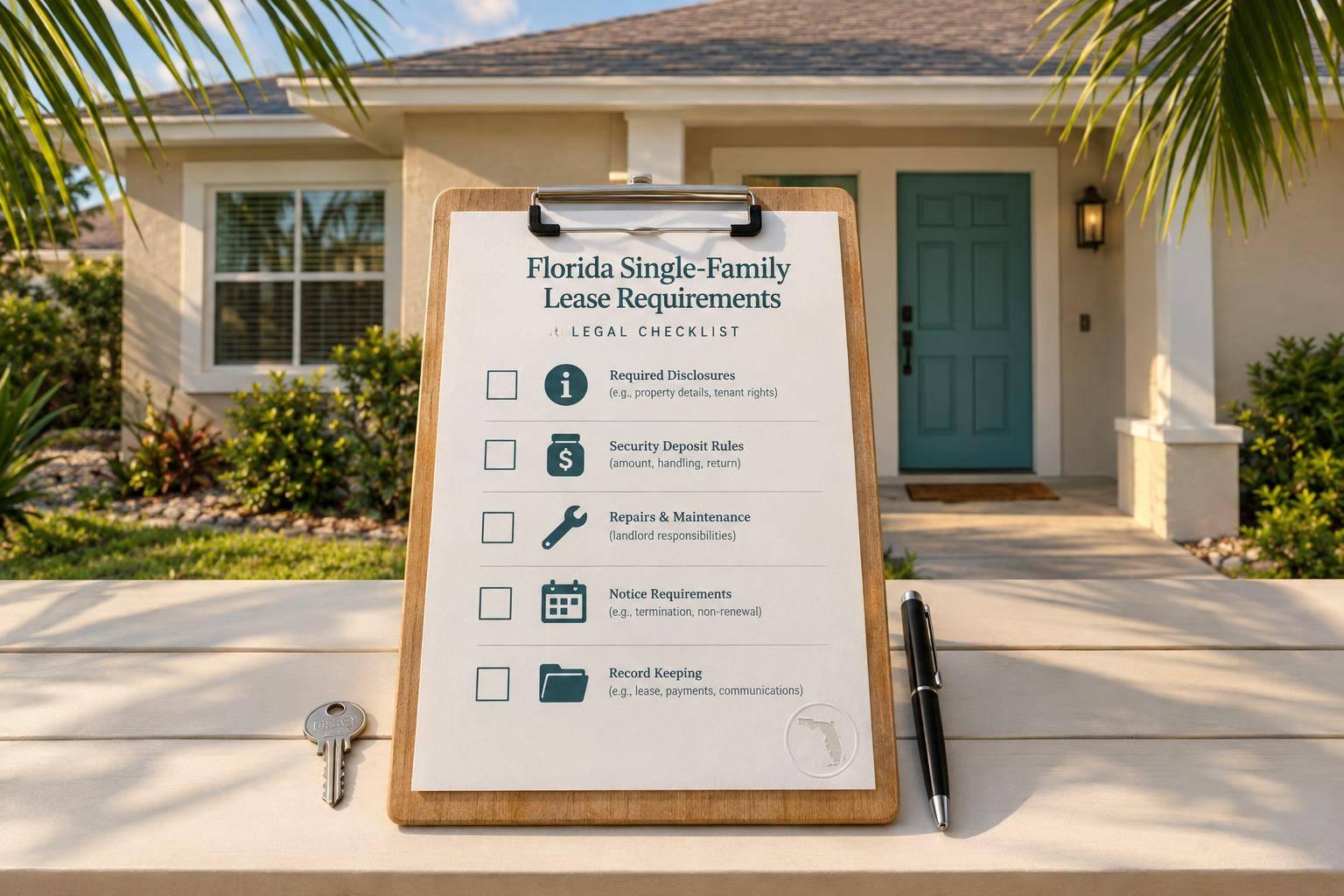

My rule for Jacksonville landlords: use written rental standards, apply them consistently, and review disability-related requests individually. Federal and Florida fair housing laws protect 7 categories throughout a tenancy – not just when you choose a tenant.
Here’s what I recommend checking:
- Lease terms and screening: Use lawful criteria for rent, deposits, guests, amenities, income, credit, and background checks.
- Occupancy limits: Treat two people per bedroom as a guideline, not an automatic legal safe harbor.
- Disability requests: Review accommodations and physical modifications promptly. Assistance animals aren’t pets, so don’t charge pet fees.
- Daily management: Keep ads, maintenance, renewals, and enforcement free from discrimination and retaliation.
- Records and support: Document decisions, protect private information, and use staff training or management systems to keep procedures consistent.
<u>A neutral lease alone isn’t enough – how you enforce it matters.</u> I recommend checking current federal, Florida, and Jacksonville requirements and getting legal advice for property-specific questions.
Lease Terms That Can Lead to Discrimination
The rules reach beyond the signed lease. Under 42 U.S.C. § 3604(a)–(c), landlords cannot make housing unavailable, impose unequal rental terms or services, or communicate protected-class preferences. Florida Statutes § 760.23(1)–(3) provides parallel protections. Professional property management in Jacksonville can help ensure these complex regulations are followed consistently. Review both lease wording and enforcement, starting with the terms and actions most likely to trigger fair housing claims.
Rent, Deposits, Guests, and Amenity Access
Do not charge higher rent or require stricter payment terms because of protected characteristics. Do not set deposits based on assumptions about families with children. Guest rules should focus on length of stay and registration – not assumptions about religion, national origin, or family status.
Base parking and amenity rules on assigned-space availability, capacity, posted safety rules, and documented conduct. Restrictions on children need a lawful, objective safety basis, not a preference for adult residents. Check pool, gym, and common-area rules for unnecessary family restrictions. Use the accommodation process to handle disability-related requests.
Advertising, Lease Renewals, and Termination
Ads, notices, renewals, and terminations must follow the same neutrality rule. Describe the property, not your preferred tenant. Check listings, signs, application materials, social posts, and automated replies for wording that suggests protected-class exclusions. The advertising ban also applies to oral rental statements.
Identical lease wording does not excuse selective enforcement. Before warning a resident, declining to renew, or terminating a lease, document the relevant clause, incident dates, evidence, notices, and how comparable violations were handled. Base decisions on supported grounds, such as nonpayment or material lease violations. Apply the same notice and cure rules to comparable cases.
sbb-itb-73b3b1a
Disability-Related Lease Requests
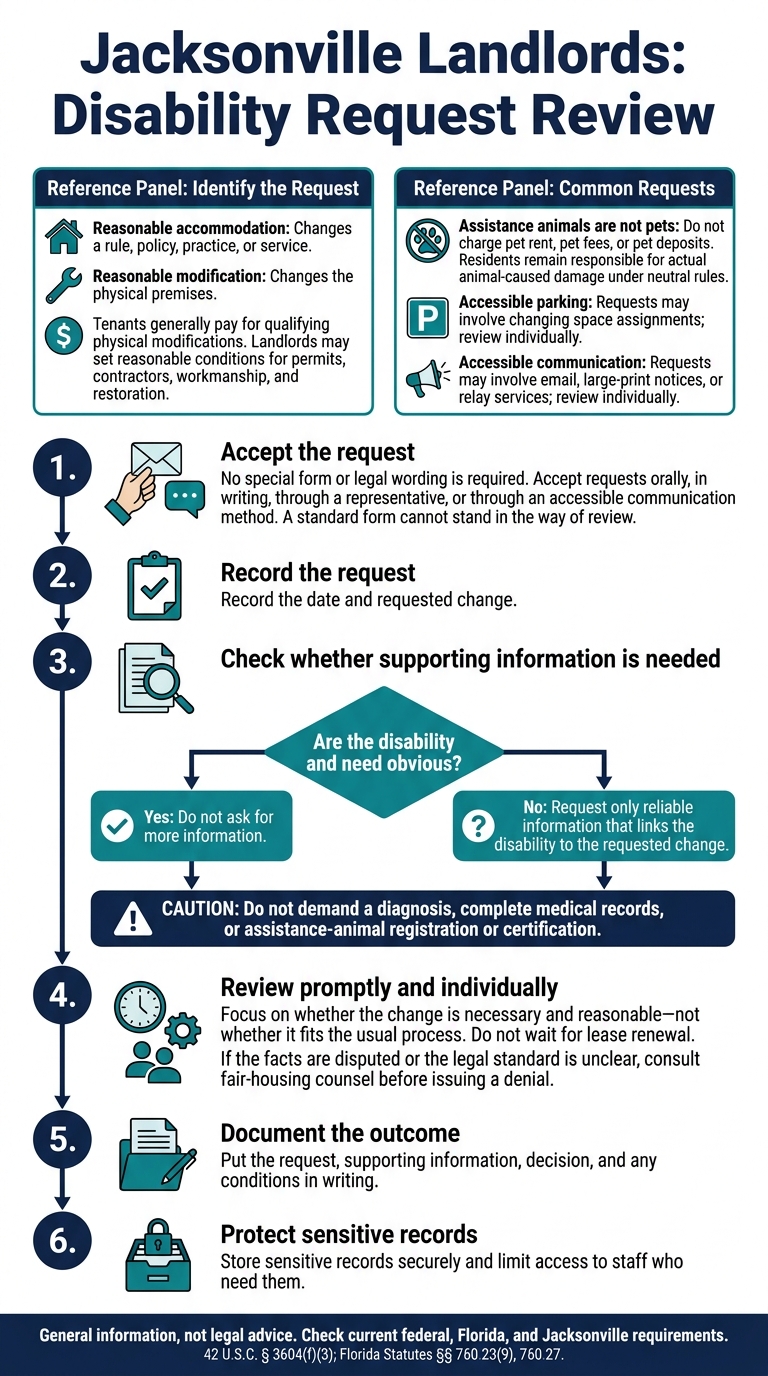
Jacksonville Landlords: Disability Request Review
Lease terms must stay neutral, but disability-related requests need a separate, prompt review process. A reasonable accommodation changes a rule, policy, practice, or service. A reasonable modification changes the physical premises. Review each request individually under 42 U.S.C. § 3604(f)(3) and Florida Statutes § 760.23(9). Tenants generally pay for qualifying physical modifications. Landlords may set reasonable conditions for permits, contractors, workmanship, and restoration.
No special form or legal wording is required. Accept requests orally, in writing, through a representative, or through an accessible communication method. Record the date and requested change. If the need isn’t obvious, ask only for enough information to review the request. A standard form can help organize records, but it can’t stand in the way of review. Treat accommodation requests as part of routine lease administration – not as special favors.
Assistance Animals, Parking, and Communication
Assistance animals are not pets. Don’t charge pet rent, pet fees, or pet deposits. Florida Statutes § 760.27 specifically addresses emotional support animals and prohibits those charges for an approved assistance animal. Residents remain responsible for actual animal-caused damage under neutral rules.
Review accessible parking and communication requests individually. These may involve changing space assignments or using email, large-print notices, or relay services. Focus on whether the change is necessary and reasonable – not whether it fits your usual process.
Request Documentation and Decisions
If the disability and need are obvious, don’t ask for more information. Otherwise, request only reliable information that links the disability to the requested change. Don’t demand a diagnosis, complete medical records, or assistance-animal registration or certification. Florida law and HUD allow certain supporting statements for assistance-animal requests.
Review requests promptly rather than waiting for lease renewal. Put the request, supporting information, decision, and any conditions in writing. Store sensitive records securely and limit access to staff who need them. If the facts are disputed or the legal standard is unclear, consult fair-housing counsel before issuing a denial.
Next, apply the same consistency to occupancy limits and screening criteria.
Occupancy Limits and Tenant Screening
Neutral lease terms need neutral screening rules. Set written income, credit, rental-history, and background criteria before you advertise, and give each requirement a lawful business or safety reason. Florida Statutes § 760.23 prohibits discrimination based on protected characteristics. Neutral wording isn’t enough: a policy can still violate fair housing law if it creates an unjustified discriminatory effect. Have counsel review your criteria before publication and whenever federal, state, or local requirements change.
Start with family-size limits, then use the same written approach for screening criteria.
Occupancy Limits for Families With Children
Two people per bedroom is a guideline – not an automatic legal safe harbor. HUD’s occupancy guidance treats that limit as a general rule of reasonableness. But whether it’s reasonable depends on factors such as the size and layout of the dwelling and sleeping areas.
For each Jacksonville property, including those in the Westside rental market, check applicable building, fire, health, and zoning requirements. Keep floor plans, measurements, inspection records, and the code provisions that support your limit. Avoid “adults only” language, separate limits on children, or overly restrictive caps that exclude families.
Income, Credit, and Background Checks
Set your income formula, accepted verification documents, credit requirements, and approach to limited rental history in advance. Check current Jacksonville and Florida rules on lawful income sources and rental assistance; this is especially critical in high-demand areas like the Southside rental market. don’t limit applicants to wages. Tie criminal-history criteria to tenancy risk, and review each record’s nature, severity, recency, and relevance.
A screening provider’s recommendation does not replace your review. When a consumer report contributes to a denial or another adverse decision, follow applicable adverse-action notice requirements. Define lawful exceptions in advance. Apply the same written standards when reviewing income, credit, background, and rental history, and keep the policy, verification, and decision records together.
Consistent Lease Administration
Fair housing duties don’t end at move-in. Do not discriminate in rent, services, or facilities, or retaliate against someone for requesting an accommodation or filing a discrimination complaint.
Once lease terms are set, apply them consistently in day-to-day management.
Lease Forms, Resident Services, and Records
Use reviewed lease forms and addenda for comparable properties, while allowing lawful property-specific terms and required accommodations. Follow the same procedures for lease signing, move-in forms, rent collection, maintenance responses, enforcement, renewals, and notices.
Train staff on fair housing, confidentiality, and when to send an issue to a designated reviewer. Send accommodation denials and complaint-related enforcement decisions to a qualified reviewer.
For each decision, record the date, decision-maker, supporting facts, and applicable lease provision. Keep lease, accommodation, notice, and enforcement records under a written retention and privacy policy. Restrict access to disability-related information, and preserve records when litigation or a government inquiry is pending.
Centralized systems help owners follow these rules consistently across properties.
Property Management Support
1 Realty Management helps Jacksonville owners centralize lease execution, renewals, maintenance, rent collection, and financial reporting so administration stays consistent.
Conclusion: Review Lease Terms and Practices
Review lease language, document objective criteria, apply policies consistently, and assess each disability-related request individually. Check current federal, Florida, and Jacksonville requirements, and seek qualified legal advice for property-specific questions. This article provides general information, not legal advice.
FAQs
Are any Jacksonville rentals exempt from fair housing laws?
Jacksonville landlords have no broad exemptions that let them bypass federal or state fair housing laws. These laws prohibit discrimination based on race, color, national origin, religion, sex, familial status, or disability. Use consistent, documented screening criteria and lease management processes for every applicant and tenant.
1 Realty Management provides professional property management in Jacksonville and guidance on these requirements to help landlords keep their rental practices compliant.
When can I deny a reasonable accommodation request?
You can deny a request only for a lawful, nondiscriminatory reason – for example, if the change isn’t reasonable or doesn’t relate to the tenant’s disability needs. Apply lease rules consistently.
Document your reasons and the specific facts behind your decision. Don’t engage in illegal retaliation or “self-help” actions. Enforce lease terms for objective business reasons, and follow the proper legal process.
What should I do if a tenant alleges discrimination?
A detailed, objective paper trail is your best protection. Keep records of communications, screening decisions, and lease enforcement actions that show you applied consistent, nondiscriminatory criteria. Document the business reasons behind your decisions, including market data supporting rent increases and objective standards used to deny applications.
If a dispute comes up, consult an attorney to check that your records and actions can withstand legal scrutiny and comply with Florida law.