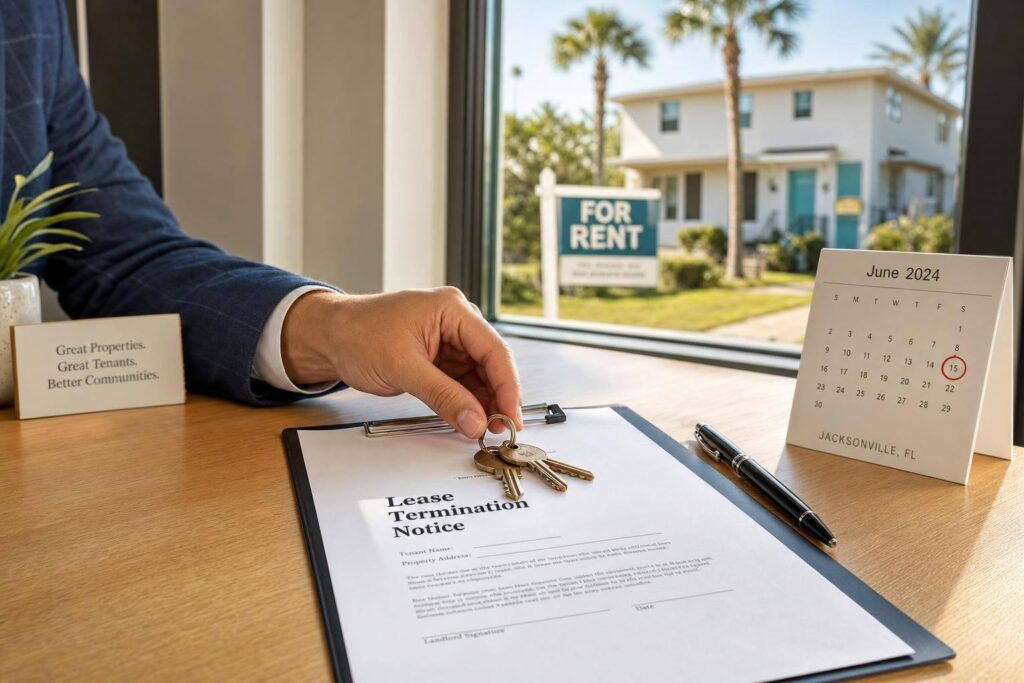
If a tenant leaves early in Jacksonville, I first need to answer one question: did they have a legal right to leave, or did they break the lease? That answer shapes what I can charge, whether I can collect rent, and how I should handle the deposit.
Here’s the short version:
- Not every early move-out is a lease breach. Florida tenants may be able to leave without penalty in cases like military duty, an unlivable unit, or certain privacy violations.
- If the tenant did break the lease, Florida law gives me 4 main paths under F.S. 83.595:
- end the lease
- re-rent for the tenant’s account
- hold the tenant liable for rent as it comes due
- charge an early termination fee if there is a signed addendum
- That early termination fee is capped at 2 months’ rent if the lease uses the right separate addendum.
- Deposit deadlines are strict: I must return the deposit within 15 days or send a claim notice within 30 days by certified mail.
- Cost matters. In Jacksonville, an uncontested eviction often runs about $800 to $1,200 and may take 30 to 45 days. A negotiated move-out can often cut vacancy time to about 15 to 30 days.
- Paperwork decides a lot of disputes. Photos, a rent ledger, notice copies, certified mail proof, and a signed addendum can make or break a claim.
Quick comparison
| Option | What it does | Main tradeoff |
|---|---|---|
| End the lease | I take back the unit and stop future rent claims | Fast reset, but I give up future rent |
| Re-rent for tenant’s account | I re-rent and may claim lost rent plus re-letting costs | I need proof of good-faith re-renting |
| Hold tenant liable for rent | I seek rent as it becomes due | More delay and collection risk |
| Early termination fee | I charge a flat fee, up to 2 months’ rent | Only works with a signed addendum |
In plain terms: I need to match the remedy to the lease, the facts, and the money. If the unit can be turned fast, a written deal and prompt re-renting may cost less than chasing every dollar through court.
sbb-itb-73b3b1a
Florida Law Gives Landlords Several Remedies After a Lease Is Broken
If the tenant breached the lease, Florida Statute 83.595 gives you four remedies after you regain possession. Once the breach is clear, the next step is picking the Florida remedy that makes the most sense for the lease and the dollars involved. For those with Westside rental investments, selecting the right remedy is key to maintaining high returns.
Ending the Lease or Re-Renting the Unit for the Tenant’s Account
You can end the lease and retake the unit for your own account. In plain English, that cuts off the tenant’s future rent liability.
The second path is to re-rent the unit for the tenant’s account. If the new rent is lower than the original rent, the former tenant can be on the hook for the difference, plus reasonable re-letting costs. But there’s a catch: if you go this route, Florida law requires a good-faith effort to get fair market rent.
Holding the Tenant Liable for Rent or Using an Early Termination Fee
A third option is to leave the unit vacant and pursue rent as it comes due. Under this approach, you may let rent pile up without re-renting right away. That can preserve your right to collect, but it also comes with a clear downside: collection gets harder if the tenant has no assets or has left the state.
The fourth option is a liquidated damages fee. If the lease includes a signed early termination addendum, Florida law allows a flat fee of up to two months’ rent.
These remedies mainly differ in speed, risk, and paperwork.
| Remedy (F.S. 83.595) | Speed | Financial Risk | Documentation Needed | Likely Outcome |
|---|---|---|---|---|
| Terminate Lease | Fastest | High (no future rent collected) | Standard move-out records | Immediate turnover |
| Re-rent for Tenant’s Account | Moderate | Medium (tenant pays deficiency) | Records of re-letting efforts and costs | Deficiency recovery |
| Hold Tenant Liable for Rent | Slowest | High (vacancy and collection risk) | Ledger of unpaid rent | Rent claim continues |
| Early Termination Fee | Fast | Low (flat fee up to two months’ rent) | Separate signed addendum | Flat-fee recovery |
The right choice depends on the lease terms, the tenant’s situation, and what delay is likely to cost you. Professional Southside property management can help you navigate these choices to minimize vacancy time.
How Lease Clauses and Documentation Help Reduce Disputes
A remedy on paper doesn’t do much if the lease language and your records don’t back it up. In practice, the lease text and the paperwork behind it matter just as much as the remedy itself.
What to Include in a Florida-Compliant Early Termination Addendum
If you want an early termination fee to hold up, the tenant needs to sign a separate addendum when the lease is signed, and the fee cannot be more than two months’ rent under Florida law. The addendum should clearly spell out:
- the required notice period
- what events trigger the fee
- whether the fee is separate from unpaid rent and damage claims
Here’s where many disputes start: notice clauses. If your lease says the tenant must give notice before moving out, Florida law only lets you enforce that term if the lease also requires you to give the tenant the same notice period when you choose not to renew. That notice period must be between 30 and 60 days. If the clause only works one way, it isn’t enforceable.
How to Handle Deposits, Notices, and Move-Out Records
Security deposit fights usually come down to timing and proof, not just whether damage happened. In Florida, landlords have 15 days to return the full deposit or 30 days to send written notice that they plan to make a claim against it. That notice must be sent by certified mail. Miss that 30-day deadline, and you lose the right to keep any part of the deposit, even if the damage is clear.
The same documents that back up an early termination fee can also support a later deposit claim.
| Record Type | Why It Matters |
|---|---|
| Signed Early Termination Addendum | Proves the tenant agreed to the liquidated damages clause |
| Dated Move-In/Move-Out Photos/Video | Helps separate actual damage from normal wear and tear |
| Certified Mail Receipt (Deposit Claim) | Shows you met the 30-day legal deadline |
| Rent Ledger | Tracks unpaid balances for court or collections |
| Copies of All Notices Served | Confirms the right amounts, dates, and delivery method |
If both sides want to part ways without dragging things out, this paperwork also makes a negotiated move-out much easier to put in writing.
Negotiated Exit Strategies May Cost Less Than Full Enforcement
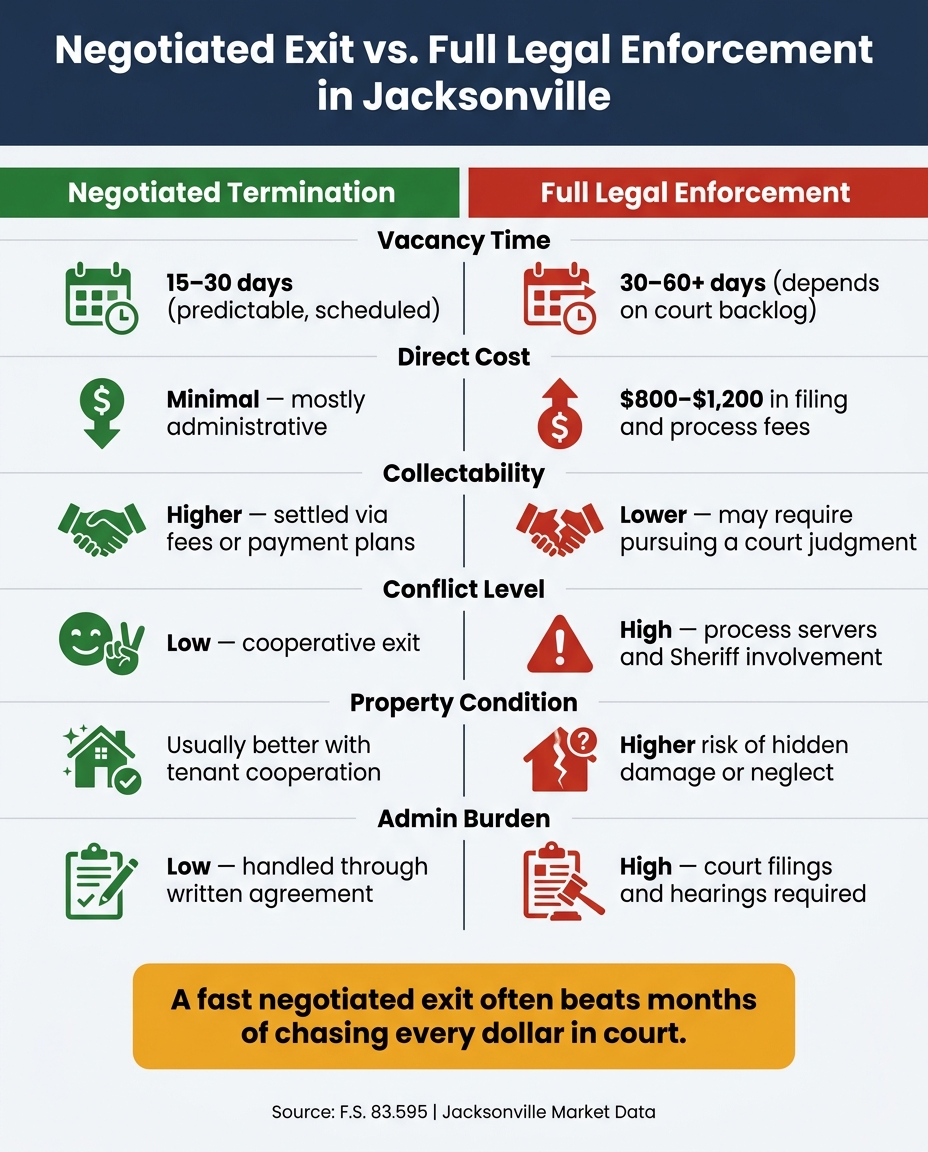
Florida Lease Termination Remedies: Negotiated Exit vs. Full Legal Enforcement
In Jacksonville, an uncontested eviction usually costs $800 to $1,200 and takes about 30 to 45 days. If the case is contested, you can expect more delay, more expense, and a lot more uncertainty. That gap in time and cost is a big reason negotiated exits often make more sense than pushing all the way through formal enforcement.
Mutual Termination Agreements, Payment Plans, and Move-Out Terms
A written mutual termination agreement helps put the move-out terms in black and white. It should spell out the exact move-out date and time, the cleaning standard the tenant must meet, and when keys and any garage door openers must be returned. You can also add a clause that makes the tenant responsible for daily rent if those items are not turned in on time.
Money terms should be just as clear. Put in writing what the tenant owes, whether that’s a fee, unpaid rent, or both. The settlement amount should connect directly to the signed addendum. If the tenant can’t pay everything at once, a payment plan may help you collect part of the balance without ending up in court. It also helps to include a forwarding address for deposit notices.
When a Fast Turnover Makes More Financial Sense Than Pursuing Every Dollar
The main issue comes down to two things: how much can you collect, and how long will it take? In a lot of cases, the numbers point to a quick negotiated exit. A unit that gets re-rented sooner starts bringing in income again much sooner than one stuck in the eviction process.
Forced evictions can also bring a higher chance of damage or neglect. By contrast, a negotiated move-out with a set walkthrough and clear expectations often gives you a better shot at getting the unit back in better shape and back on the market faster.
| Factor | Negotiated Termination | Full Legal Enforcement |
|---|---|---|
| Vacancy Time | Scheduled and predictable, often 15–30 days | 30–60+ days depending on court backlog |
| Direct Cost | Minimal, mostly administrative | $800–$1,200 in fees |
| Collectability | Higher, often settled through fees or payment plans | Lower, and may require pursuing a court judgment |
| Conflict Level | Low; cooperative exit | High; process servers and Sheriff involvement |
| Property Condition | Usually better, with more tenant cooperation | Higher risk of hidden damage or neglect |
| Admin Burden | Low; handled through a written agreement | High; court filings and hearings |
In many situations, a fast turnover beats months of trying to collect every last dollar. Once the tenant is out, move straight into turnover, deposit accounting, and reletting.
Steps After Early Termination: Reletting, Collections, and Professional Support
Once possession returns, the job changes fast. At that point, it’s less about lease rights and more about turning the unit over fast and backing up any deposit claim with proof. Moving on both fronts helps protect rental income and keep you in line with the rules.
A Clean Turnover Process Reduces Vacancy Loss
Secure the unit right away. Then take photos and video of every room before anything gets moved. Those records can support deposit deductions and damage claims later on. Pair them with move-out photos, inspection notes, and certified notice records if you need to justify a deposit claim.
When you review the unit’s condition, stick to one clear standard: itemize each charge by the actual repair. That tends to hold up better than broad labels. For example, "Professional carpet cleaning due to pet staining: $225" is much stronger than a vague line like "cleaning".
After the inspection, handle health and safety repairs first:
- HVAC
- Plumbing
- Electrical systems
Then move into cleaning, repairs, and repainting as needed. Once the unit is ready, price it at current market rates and screen new applicants using proven tenant screening strategies for income, credit, and rental history.
After the unit is secured and documented, don’t let it sit. Move straight into repairs and relisting.
How 1 Realty Management Can Help Jacksonville Landlords

When timing is tight, help with marketing, screening, and rent-ready work can cut down vacancy time. 1 Realty Management helps Jacksonville landlords work through post-termination steps with rent-ready repairs, property marketing, tenant screening, lease execution, rent collection, and organized documentation. That includes notices, proof of delivery, and payment records, which may matter if a dispute ends up in court.
Conclusion: Choose the Remedy That Fits the Numbers and the Lease
The best move after an early termination comes down to the numbers and the paperwork. Look at how fast you can re-rent, how much you’re likely to collect, and how strong your records are. Then choose the remedy that gives you the best balance of rent recovery, vacancy time, and proof.
FAQs
How do I know if a tenant can legally break the lease?
In Florida, tenants usually can’t break a lease early without paying a penalty unless they fall under a few specific legal exceptions.
One common exception is when a landlord keeps violating the tenant’s right to privacy. For example, that can happen if the landlord enters the rental unit without giving the required 12 hours’ notice. Another exception is when the property breaks health or safety rules, or becomes unlivable.
In either case, the tenant has to give written notice and give the landlord 7 days to fix the problem.
Which Florida remedy makes the most financial sense?
There’s no single Florida remedy that makes the most financial sense in every case. The best option depends on your goals and your situation.
In general, landlords can:
- terminate the lease and end the tenant’s liability
- retake possession and hold the tenant liable for losses after re-renting
- keep the tenant liable for rent as it comes due
For many landlords, re-renting the unit as soon as possible is the most effective way to cut losses.
What mistakes can make a deposit claim fail?
In Florida, messing up the security deposit rules can cost you the right to make deductions – even when the deductions themselves are valid.
The most common slipups are pretty simple:
- Failing to keep the deposit in an approved account
- Not giving written notice within 30 days of receiving the deposit that says where the money is being held
- Not sending the deduction notice by certified mail within 30 days after the tenant moves out
That timing matters. If you miss one of these steps, you may lose your chance to keep any part of the deposit.