Managing shared spaces in PadSplit homes can be challenging, especially when residents have different habits, schedules, and standards for cleanliness. Common issues include disputes over kitchen and bathroom use, noise complaints, and repeated rule violations. To maintain harmony and reduce conflicts:
- Set Clear House Rules: Collaborate with residents to establish specific guidelines for shared spaces, such as assigned shelves, bathroom schedules, and quiet hours.
- Address Complaints Promptly: Log issues, respond quickly, and follow a structured process for resolution, including mediation if necessary.
- Use Tools for Accountability: Leverage PadSplit’s features like the Member Rating System, Chore Tracker, and Messenger App to encourage cooperation and track disputes.
- Design for Shared Living: Provide adequate storage, limit bathroom sharing to four residents, and maintain properties regularly to prevent issues.
In Jacksonville, additional considerations like shift-based schedules, parking constraints, and climate-related maintenance require tailored solutions. Professional property management services can help streamline operations and ensure compliance with local laws.
Common Shared Space Conflicts in PadSplit Properties
Shared living works best when everyone aligns on expectations – but that harmony doesn’t always happen immediately. When people with different habits, schedules, and lifestyles share a home, conflicts are bound to arise. These disagreements often center around a few recurring issues. Let’s break down the most common ones and how they can be managed.
Kitchen and Food Storage Disputes
The kitchen tends to be a hotspot for disagreements. As PadSplit notes, "The most common issues we hear about at PadSplit are related to use of shared spaces and using items without asking." These issues can take many forms: someone eating another resident’s food, leaving dirty dishes in the sink, neglecting to clean countertops, or hogging too much refrigerator space.
One effective way to minimize these conflicts is through clear storage organization. For example, assigning specific shelves or cabinets to each resident can help set clear boundaries. For properties with eight or more occupants, PadSplit suggests providing multiple refrigerators to ensure everyone has adequate space. Without enough room, even small habits can snowball into ongoing frustrations.
Similar challenges often arise in shared bathrooms as well.
Bathroom Access and Cleanliness Problems
Bathroom sharing can lead to a variety of conflicts, from cleanliness issues – like unflushed toilets or cluttered counters – to scheduling struggles. These disagreements can disrupt daily routines and create tension among residents. To mitigate this, PadSplit recommends limiting bathroom sharing to no more than four bedrooms per bathroom. Exceeding this ratio can make scheduling nearly impossible and amplify frustrations.
Landlords should also keep an eye out for plumbing issues. Frequent repair requests might indicate that residents are flushing inappropriate items, which not only leads to costly repairs but can also cause resentment among housemates who share the expense.
Noise and Quiet Hours Violations
Noise complaints are another frequent source of tension, often because they feel personal. A resident with an early morning shift might be particularly bothered by a housemate watching TV late at night, while someone on a night schedule may have different sensitivities. To help manage this, PadSplit enforces "Quiet Time" from 11:00 p.m. to 9:00 a.m. daily. During these hours, activities like playing loud music, shouting, or slamming doors are prohibited.
Noise issues often go beyond sound – they can evoke feelings of disrespect, especially when sleep is disrupted. Addressing these complaints quickly is key, as unresolved issues can escalate into long-term disputes.
Repeated Rule Violations
When certain behaviors – like ignoring quiet hours, leaving messes in common areas, or taking up more than a fair share of storage – happen repeatedly, they can create ongoing stress for everyone involved. PadSplit’s resolution framework addresses these patterns through its member rating system. Residents are rated on a scale of 1 to 5, and landlords are automatically alerted if a member’s score drops to a 1 or 2. If the low rating persists for four consecutive weeks, the resident is flagged for an internal review by PadSplit’s customer experience team.
sbb-itb-73b3b1a
A Framework for Resolving Shared Space Conflicts
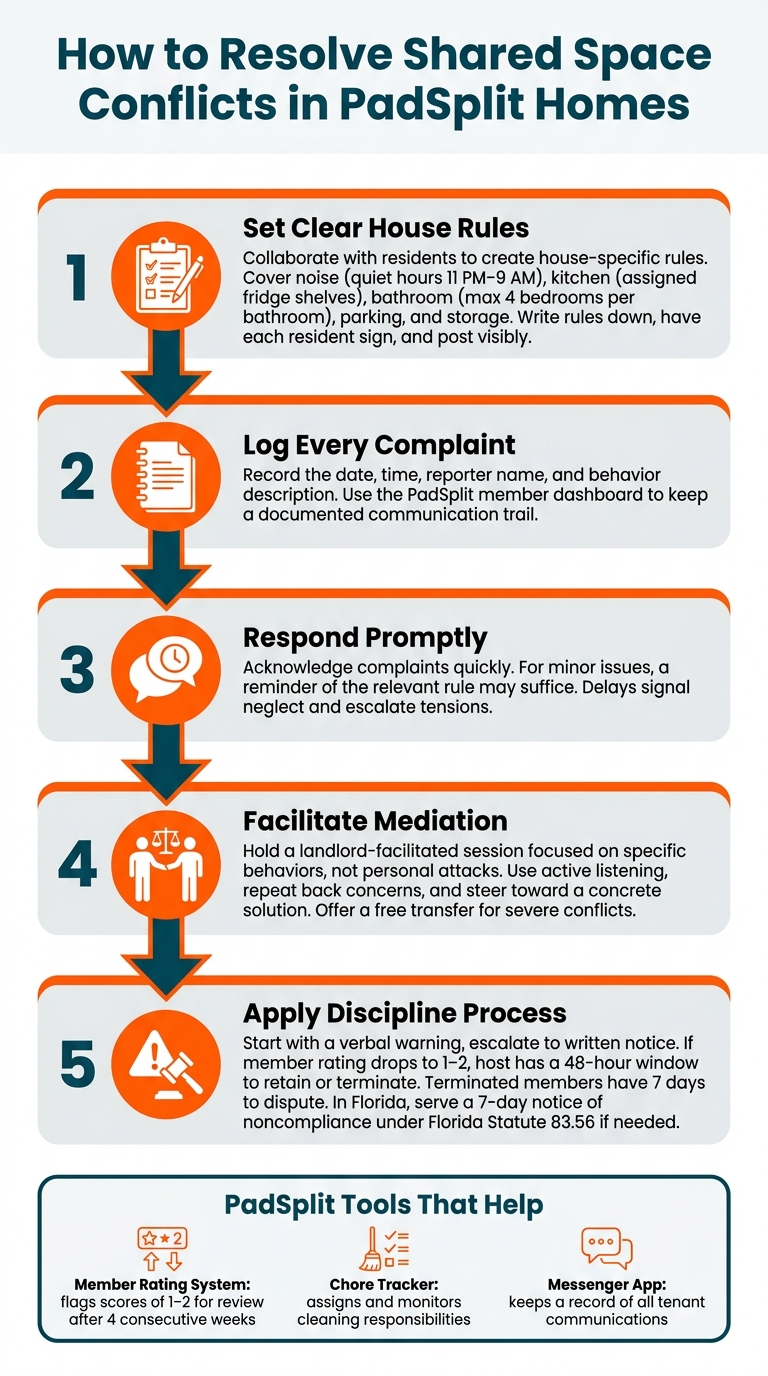
How to Resolve Shared Space Conflicts in PadSplit Homes
Understanding and addressing shared space conflicts requires a structured and consistent approach. Without a clear process, landlords risk inconsistent handling, which can lead to worsening tensions or even discrimination claims.
Setting Clear House Rules and Communicating Them
While every PadSplit property operates under global Membership Rules, these alone don’t cover everything. Hosts are encouraged to collaborate with residents to create house-specific rules tailored to the property’s unique needs – think assigned fridge shelves, bathroom schedules, or parking arrangements.
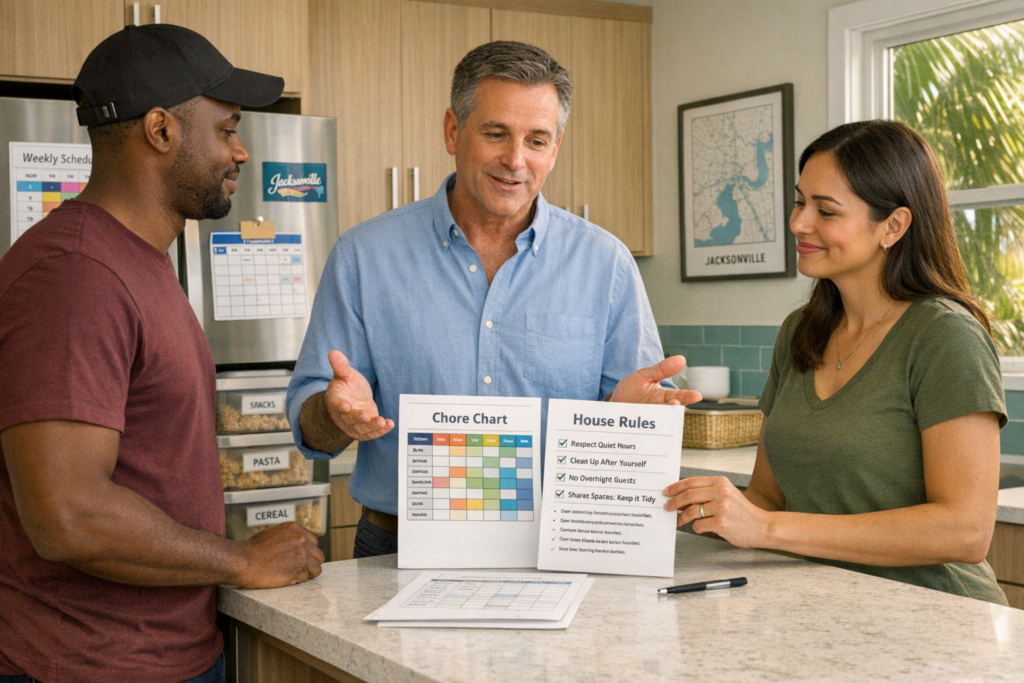
Hosting a house meeting to establish these rules together can encourage compliance. Once the group agrees, write the rules down, have each resident sign off, and post them in a visible spot (like the refrigerator door). Rules should clearly outline consequences for violations, whether that’s extra cleaning responsibilities or a formal "Call Out" on the member dashboard. Ambiguous rules with no defined outcomes are often ignored. As PadSplit advises:
"If you don’t write down the rules, the issues, and the consequences it can be hard to remember. Write the house rules on a sheet of paper and have each PadMate sign."
Here’s an example of how house-specific rules can complement PadSplit’s standard requirements:
| Rule Category | Standard PadSplit Requirement | Recommended House-Specific Addition |
|---|---|---|
| Noise | Quiet hours: 11:00 PM – 9:00 AM | Specific TV volume limits or guest hours |
| Cleaning | Common areas must be kept free of trash | Rotating chore schedule for deep cleaning |
| Kitchen | No appliances or cooking in bedrooms | Assigned shelves in fridge and pantry |
| Parking | No parking on grass; register one vehicle | Specific spot assignments based on work schedules |
| Storage | No outside furniture or common area storage | Rules for labeling food and shared supplies |
Once rules are in place, swift and documented action becomes essential when issues arise.
Logging and Responding to Complaints
The first step in handling a complaint is to log it. Include details like the date, time, reporter, and a description of the behavior. Keeping a record helps identify patterns and provides legal protection.
Respond to complaints promptly. Delays can signal to residents that their concerns aren’t taken seriously, which may lead to them taking matters into their own hands. Using the PadSplit member dashboard for communication is a good option since it keeps a record of all exchanges. For minor, isolated complaints, a simple acknowledgment and reminder of the relevant rule might be enough.
Running a Fair Mediation Session
When conflicts arise between residents, landlord-facilitated mediation can help de-escalate tensions. The goal is to re-establish a workable living arrangement while reinforcing house rules.
Focus on specific behaviors and rule violations, avoiding personal attacks or assumptions about intent. PadSplit emphasizes the importance of empathy during these sessions:
"Often people mistake understanding another person for agreeing with them, but understanding is simply the act of saying ‘if I were in your shoes, I might feel the same way, too.’"
Active listening is key – repeat back what each person says, ask clarifying questions, and steer the conversation toward a concrete solution. For severe conflicts, offering a free transfer may ensure safety and prevent further issues.
Handling Repeat Offenders with a Discipline Process
If mediation doesn’t resolve the issue, a structured discipline process is essential. Begin with a verbal warning, escalating to a written notice if the behavior persists. Document every step thoroughly.
PadSplit’s member rating system plays a role here. If a member’s score drops to a 1 or 2, hosts have a 48-hour window to decide whether to retain the member or proceed with termination. Terminated members have 7 days to dispute the decision. If a notice to vacate is issued, PadSplit reviews it to ensure compliance with housing laws.
For lease violations in Florida, landlords can serve a 7-day notice of noncompliance under Florida Statute 83.56. If a member refuses to leave after termination, the landlord must follow Florida’s eviction process. It’s crucial to issue notices to all involved parties in shared violations, like a late-night disturbance, to avoid claims of discrimination.
Ways to Reduce Shared Space Conflicts Before They Start
Taking steps like setting clear expectations, organizing schedules, and designing spaces thoughtfully can prevent many common PadSplit conflicts from arising.
Setting Expectations at Move-In
Start by creating a listing that clearly explains shared spaces, parking rules, and guest policies to avoid misunderstandings. A screening call can then go over house rules and responsibilities, ensuring prospective members align with the household’s dynamics. Emanuel Premate, a PadSplit host, shares his approach:
"Setting these expectations over a phone call and then reinforcing them in an automated move-in message will minimize issues during move-in."
On move-in day, a walkthrough can help familiarize members with shared space arrangements and cleaning guidelines. Introduce tools like the PadSplit Messenger App and Chore Tracker during this time, and follow up soon after move-in to reinforce these standards. These steps lay the groundwork for smooth day-to-day operations.
Using Schedules and Shared Storage Solutions
A bathroom schedule can help reduce congestion, especially when limiting shared bathrooms to four bedrooms. In the kitchen, assigning refrigerator shelves and labeling food can prevent disputes over space. For larger households with eight or more members, adding a second refrigerator and posting a cleaning schedule can further ease potential tensions.
Property Design and Maintenance That Supports Shared Living
Good property design can also play a big role in minimizing conflicts. Durable materials like granite countertops handle frequent cleaning better, while punch locks on bedroom doors enhance privacy and security. Designating parking spots and adding extra parking pads where possible can eliminate outdoor disagreements. Regular maintenance keeps issues from escalating, and removing shared storage areas can reduce clutter-related disputes.
Encouraging Respectful Communication Between Tenants
Encourage tenants to use the PadSplit Messenger App for resolving conflicts. This platform keeps a record of conversations, reducing the need for landlord involvement. Quentin Wendt, an Atlanta-based PadSplit host, emphasizes the importance of empowering tenants:
"I empower members to make suggestions and work with each other to resolve issues collaboratively. It’s about giving them the tools and trust to maintain their shared space."
Regular house meetings can also help foster a sense of community and encourage open communication. These proactive strategies complement the conflict resolution process, creating a more harmonious shared living environment.
PadSplit Management Considerations Specific to Jacksonville
Local conditions in Jacksonville influence how shared living spaces operate, requiring property managers to adapt their strategies to the city’s unique environment and challenges.
Work Schedules and Neighborhood Dynamics
Jacksonville’s economy relies heavily on shift workers employed by major organizations like JAXPORT, Mayo Clinic, Baptist Health, and Naval Station Mayport. Many PadSplit members have early work shifts or late returns, leading to predictable issues. For example, morning shifts can overwhelm bathroom availability, while parking spots near employment hubs – especially in Northside and Westside neighborhoods – quickly become scarce due to logistics and port workers.
To address these challenges, consider assigning parking spaces in your listing so potential members know what to expect before booking. Adding a backyard parking pad can also help manage overflow. Posting a morning bathroom schedule aligned with local shift patterns is another practical way to reduce congestion without requiring constant landlord intervention.
Heat, Humidity, and Property Design Challenges
Jacksonville’s hot and humid summers put extra strain on shared properties. HVAC systems often run non-stop, plumbing usage increases, and outdoor areas can quickly become unsanitary without proper waste management. PadSplit’s utility-inclusive model, which covers air conditioning costs, helps avoid disputes over energy bills. However, timely maintenance remains critical. As PadSplit advises:
"If a leaking toilet isn’t fixed, it could lead to larger plumbing issues and higher water bills. This prevents problems from getting bigger and saves Hosts money, but it will also increase Member satisfaction and tenure."
To manage outdoor waste during the hotter months, requesting additional trash and recycling bins from the city can prevent overflow and maintain cleanliness.
Staying Compliant with Florida Rental Laws
In February 2025, a Jacksonville Municipal Court ruled in favor of a PadSplit host accused of operating "illegal boarding houses", setting an important legal precedent. Jacob Stone of The Investors Circle commented:
"A legal precedent now exists for future cases in Jacksonville."
Despite this ruling, hosts must remain vigilant about compliance. Ensure your property adheres to local zoning laws and includes mandatory flood disclosures in lease agreements. Staying informed through groups like the Jacksonville Landlords Association or the First Coast Apartment Association (FCAA) can help you navigate regulatory updates. Additionally, when issuing notices to vacate, have them reviewed carefully. PadSplit often steps in to ensure notices comply with housing laws, reducing risks for hosts.
How Professional Property Management Can Help
Managing PadSplit properties in Jacksonville requires balancing shift-based schedules, climate-related maintenance, regulatory compliance, and tenant logistics. Partnering with a professional management company can simplify this process. For example, 1 Realty Management specializes in handling PadSplit properties across Jacksonville and Duval County. Their services include cleaning, maintenance coordination, tenant screening, and move-in logistics. For landlords who want the financial benefits of co-living without the operational headaches, working with a local firm familiar with Jacksonville’s neighborhoods and Florida’s rental laws can make all the difference.
Conclusion: Keeping Shared Spaces in PadSplit Homes Running Smoothly
Managing shared spaces in PadSplit homes boils down to consistency. By establishing clear house rules, creating a fair complaint process, implementing structured mediation, and designing spaces thoughtfully, hosts can keep tensions low and ensure tenants feel satisfied.
Successful hosts treat their members like valued clients, showing empathy and responsiveness at every turn. This service-oriented mindset makes a huge difference. When members feel respected and heard, minor issues are far less likely to spiral into major conflicts.
The tools and strategies discussed throughout this article – like the Chore Tracker, Messenger App, and Member Rating System – help hosts maintain accountability without feeling overbearing. When combined with strong onboarding practices and consistent enforcement of house rules, these measures ensure that most disputes are resolved before they escalate. This proactive approach complements the structured conflict resolution process, which relies on clear rules, documented complaints, and fair mediation to maintain harmony and satisfaction among tenants.
In Jacksonville, specific challenges like Florida’s climate, shift-based schedules, and local compliance requirements make professional management a worthwhile option. Services such as 1 Realty Management specialize in PadSplit property management across Jacksonville and Duval County, taking care of daily operations so hosts can focus on growing their portfolios instead of handling tenant concerns.
Shared living thrives when everyone understands the rules, trusts the processes in place, and feels the property is managed with fairness. Nail down these basics, and your PadSplit home can remain a well-functioning, harmonious space for the long haul.
FAQs
What should I do if two residents disagree and blame each other?
Residents should start by addressing the issue directly with open and respectful communication. Whether it’s a face-to-face conversation or using the member dashboard messenger, the goal is to understand each other’s perspectives and work toward a compromise. If the problem persists, they can organize a house meeting or request mediation assistance from their Host. As a final step, residents can reach out to PadSplit support or consider transferring to another unit if necessary.
How can I enforce house rules without risking discrimination claims?
To ensure house rules are enforced fairly, focus on using clear, consistent, and well-documented criteria. Apply these rules equally to all residents, addressing behavior strictly according to pre-established policies. If you need to issue a notice to vacate, make sure it’s directly related to specific actions or lease violations. Always coordinate with PadSplit to confirm adherence to housing regulations. For added support, 1 Realty Management provides professional property management services to promote fairness and transparency.
When is it time to terminate a resident for repeated violations?
Termination becomes necessary when a member’s score falls to 1 or stays at 2 for more than four consecutive weeks, prompting an internal review. Before taking action, it’s important to issue a formal Notice to Vacate. In cases of severe rule violations – like criminal activity, acts of violence, or the issuance of a Temporary Protective Order (TPO) – immediate termination may be required.
For assistance with such situations, 1 Realty Management provides professional property management services, including handling evictions in Jacksonville, Florida.