Jacksonville landlords can inspect rentals, but entry has limits. I recommend starting with Florida’s rules: repairs require at least 24 hours’ notice, with entry between 7:30 a.m. and 8:00 p.m. Use that as your routine-inspection baseline, while checking the lease and getting consent where required.
Here’s the approach I recommend:
- Respect privacy: Inspect property conditions – not personal belongings. Special entry rules apply to emergencies, consent, and certain absences.
- Check safety: Look for leaks, wiring problems, alarm issues, damaged stairs, and other hazards under the codes that apply.
- Plan inspections: Base move-in, routine, move-out, and post-repair checks on the lease and property needs.
- Fix and verify: Address urgent hazards first, check who must repair or pay, and confirm the work is done.
- Keep records: Save notices, photos, findings, repair updates, and completion checks.
<u>Choosing a property management company does not remove your compliance duties.</u> I treat this as a maintenance checklist – not a substitute for property-specific legal advice.
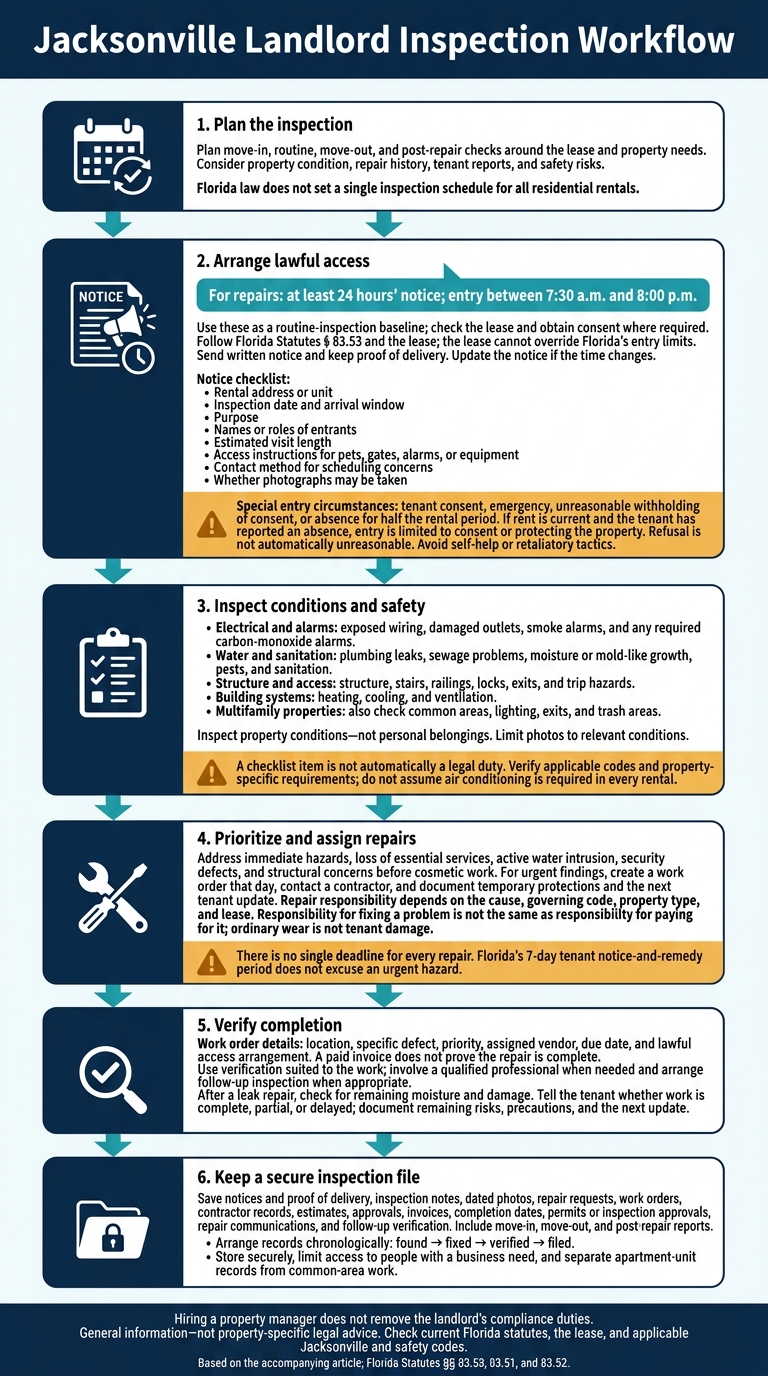
Jacksonville Landlord Inspection Workflow
When Can Jacksonville Landlords Enter a Rental?
Jacksonville landlords can inspect rentals, but they must follow Florida’s access rules and the lease. Under Florida Statutes § 83.53, tenants may not unreasonably withhold consent for periodic inspections, necessary or agreed repairs, agreed services, or permitted property showings. A lease may set scheduling rules, but it cannot override Florida’s entry limits.
Entry depends on the reason for the visit, the notice given, and the time of day.
What Notice and Entry Hours Apply?
For repairs, Florida defines reasonable notice as at least 24 hours before entry and reasonable hours as 7:30 a.m. to 8:00 p.m. Use that notice period and those hours as a safe baseline for routine inspections unless the lease says otherwise.
An inspection notice should include:
- The rental address or unit.
- The inspection date and arrival window.
- The purpose of the visit.
- The names or roles of everyone expected to enter.
- The estimated visit length.
- Access instructions for pets, gates, alarms, or equipment.
- A contact method for scheduling concerns.
- Whether photographs may be taken.
Send written notice and keep proof of delivery. If the time changes, send an updated notice. Offer a chance to reschedule when practical. These notice rules also guide how landlords schedule and document inspections.
When Can Landlords Enter Without Advance Notice?
Section 83.53 allows entry with the tenant’s consent, in an emergency, when the tenant unreasonably withholds consent, or when the tenant is absent for half the rental period. If rent is current and the tenant has reported an absence, entry is limited to consent or protecting the property.
After urgent entry, notify the tenant as soon as reasonably possible. Record why you entered, who entered, what they did, and when you notified the tenant.
What Should an Inspection Notice Include?
For a routine inspection, include the written notice details listed above. A tenant’s inability to attend does not automatically cancel a properly noticed entry.
Explain any limited photos you plan to take of the property’s condition. Avoid photographing personal papers or unrelated items, store images securely, and share them only with people who need them.
What If a Tenant Refuses Entry?
A refusal is not automatically unreasonable under § 83.53. That depends on the circumstances. Ask whether the concern involves timing, pets, privacy, or health. Offer one reasonable adjustment before seeking Florida legal guidance about disputed entry or escalation.
Do not use self-help or retaliatory tactics.
sbb-itb-73b3b1a
When Should Landlords Inspect, and What Should They Check?
Are Move-In, Routine, and Move-Out Inspections Required?
Florida law does not set a single inspection schedule for all residential rentals. Plan inspections around the lease and the property’s needs, including its condition, repair history, tenant reports, and safety risks. Section 83.51 sets maintenance and code-compliance duties – not a universal inspection calendar.
Use move-in and move-out reports with dated photos and a room-by-room checklist. Give tenants a chance to flag defects you missed.
Set periodic checks that suit the property, along with targeted inspections after major repairs, severe weather, repeated complaints, or reported water intrusion. After repairing a leak, check the affected area for remaining moisture and damage. For each scheduled inspection, use a checklist focused on safety and code issues.
What Safety Issues Should Landlords Check?
Check for exposed wiring, damaged outlets, plumbing leaks, sewage problems, and moisture or mold-like growth. For smoke alarms and any required carbon-monoxide alarms, check placement, operation, power source, age, and damage. Requirements vary by property and circumstances.
Inspect the structure, stairs, railings, locks, exits, and trip hazards. Include heating, cooling, ventilation, pests, and sanitation in your checks.
A checklist item is not automatically a legal duty. Check installed cooling equipment, but don’t assume § 83.51 requires air conditioning in every rental. Match your findings to the applicable local code and repair duty.
Which Local Codes Apply to the Rental?
Local rules help determine what each finding means for the rental. Verify the property’s address, use, and building type with the relevant building, housing, fire, or health authority.
For single-family rentals, inspect the dwelling and exterior. For multifamily rentals, also check common areas, lighting, exits, and trash areas. Use the applicable codes to determine which safety findings require repairs.
Jacksonville code enforcement handles complaints separately, but owners must still correct violations at rented properties. Its contact number is (904) 630-CITY (2489).
Who Handles Repairs, and What Records Should Landlords Keep?
When an inspection finds a problem, assign the repair, set a timeline, and document the work and its results.
Who Is Responsible for Repairs Found During Inspections?
Repair responsibility depends on the cause, governing code, property type, and lease.
Under § 83.52, tenants must keep occupied areas clean and sanitary, use fixtures and systems properly, and avoid damaging the property. If you suspect tenant-caused damage, document it and ask the tenant for an explanation. Proactive tenant screening strategies can help minimize these risks before a lease is signed.
Review the lease before charging for repairs. Responsibility for fixing a problem isn’t the same as responsibility for paying for it. Ordinary wear isn’t tenant damage, and any lease provision that shifts repair costs must be valid.
For apartments and shared housing, separate unit repairs from common-area or shared-system work. Identify the affected area and who will coordinate access.
How Soon Must Landlords Address Inspection Findings?
There’s no single deadline for completing every repair. Address immediate hazards, loss of essential services, active water intrusion, security defects, and structural concerns before cosmetic work.
For urgent findings, create a work order that day, contact a contractor, and record temporary protections and when you’ll next update the tenant. Florida’s 7-day tenant notice-and-remedy period does not excuse an urgent hazard.
How Should Landlords Verify Completed Repairs?
Each work order should state the location, specific defect, priority, assigned vendor, due date, and lawful access arrangement. Keep estimates, approvals, invoices, completion dates, and any required permits or inspection approvals.
A paid invoice doesn’t prove the repair is complete. Use a verification method suited to the work. Have a qualified professional confirm safe operation when needed, and arrange a follow-up inspection when appropriate.
Tell the tenant whether the work is complete, partial, or delayed. Document remaining risks, temporary precautions, and the timing of the next update. Add the verification to the inspection file.
Which Inspection and Repair Records Should Landlords Keep?
Keep one file for each inspection and repair cycle. Include notices and proof of delivery, inspection notes, photos, repair requests, contractor records, permits or approvals, repair communications, and follow-up verification.
Also keep work orders and move-in, move-out, and post-repair reports. Use photos to show both the condition and the repair.
Store files consistently and securely. Limit access to people with a business need, and keep apartment-unit records separate from common-area work. Arrange the file chronologically so it shows what was found, fixed, verified, and filed.
Conclusion: Follow Entry Rules, Make Repairs, and Keep Records
Treat inspections as a maintenance cycle: lawful access, clear notice, safety checks, prompt repairs, and a record of completed work.
1 Realty Management offers Jacksonville property management support for tenant communication and maintenance coordination. Before signing, confirm which inspections the service includes, how it records findings, and who handles urgent follow-up. The landlord still remains responsible for compliance, even with outside help.
Before using a standard inspection procedure, check current Florida statutes, your lease, and applicable Jacksonville and safety codes. Consult a Florida landlord-tenant attorney about disputed access, habitability, retaliation, or code enforcement. This article provides general information, not legal advice for your property.