

Property managers handle everyday operations for rental properties, acting as a bridge between landlords and tenants. Their main responsibilities include:
- Finding and Screening Tenants: Verifying income, credit, and rental history while complying with Fair Housing laws.
- Rent Collection and Financial Oversight: Using digital tools to collect rent, track expenses, and provide financial reports.
- Lease Management: Drafting, renewing, and enforcing lease agreements per Florida rental laws.
- Property Maintenance: Coordinating repairs, conducting inspections, and ensuring safety and livability standards are met.
- Legal Compliance: Managing security deposits, addressing lease violations, and handling evictions following Florida regulations.
In Jacksonville, property managers also focus on setting competitive rent prices based on local market trends and maintaining strong vendor relationships for timely repairs. They typically charge 8%–12% of monthly rent for single-family homes and 5%–10% for multi-family units. Property management reduces landlord stress, ensures legal compliance, and helps maintain property value.
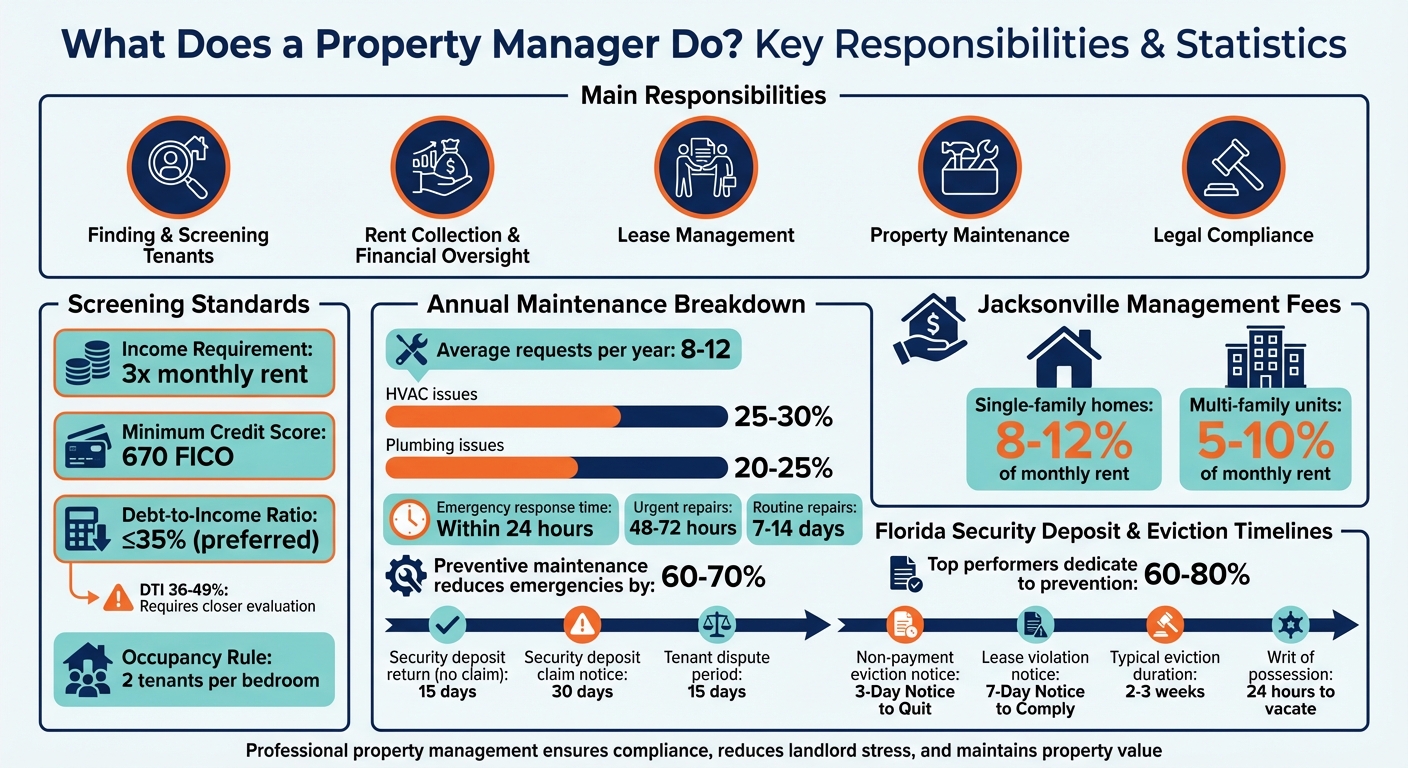
Property Manager Responsibilities and Key Statistics for Jacksonville Rentals
What Does a Property Manager Actually Do?
sbb-itb-73b3b1a
Main Duties of a Property Manager
Property managers play a key role in tenant screening, financial oversight, and lease management. These responsibilities require precision and a solid understanding of Florida rental laws to safeguard landlords while fostering good tenant relationships.
Screening and Placing Tenants
The process of finding dependable tenants begins with thorough income verification. Applicants typically need to demonstrate a monthly income that’s about three times the rent, ensuring their housing expenses remain at or below 30% of their gross income.
Next comes analyzing credit and debt. A FICO score of around 670 is generally the minimum standard for approval, while a Debt-to-Income (DTI) ratio of 35% or less is preferred. Applicants with DTI ratios between 36% and 49% are evaluated more closely to ensure they can manage rent payments alongside existing financial obligations.
Background checks are also critical. These include reviewing federal, state, and county records for criminal convictions, eviction history, and frequent moves. Managers often go a step further by contacting previous landlords directly instead of relying solely on references provided by the applicant. Local court records are also checked for undisclosed eviction filings. Personal interviews help assess the applicant’s professionalism and compatibility with the property.
All tenant screening must align with the Fair Housing Act, which prohibits discrimination based on race, religion, gender, disability, and other protected categories. Standard occupancy rules generally allow two tenants per bedroom.
Once qualified tenants are secured, the focus shifts to ensuring rent is paid on time to keep operations running smoothly.
Collecting Rent and Tracking Finances
Property managers use structured systems for rent collection, often leveraging digital platforms, ACH transfers, and online portals that provide 24/7 access. These tools help reduce late payments and improve cash flow, which is essential in Jacksonville’s competitive rental market.
"Property managers establish a structured rent collection system using digital tools, automatic withdrawals, and secure payment platforms to reduce late fees and accelerate cash flow." – Skybridge Property
If rent is late, managers act quickly by imposing penalties and issuing legal notices. They also maintain detailed financial records, which include expenses for repairs, maintenance, insurance, and mortgage payments. Landlords receive regular financial reports that detail earnings, budgets, and return on investment. Keeping these records also simplifies tax preparation at the end of the year.
In Jacksonville, property management fees typically range from 8% to 12% of the monthly rent. For multi-family properties, these fees are often lower, ranging from 5% to 10%, due to cost efficiencies.
Creating and Renewing Leases
Lease management is another critical responsibility, ensuring both landlords and tenants are protected.
If authorized in writing, property managers can sign leases on behalf of property owners. They handle everything from preparing initial leases and processing renewals to accepting official notices to vacate. All lease agreements comply with Florida rental laws, ensuring they are legally binding and protect both parties.
"Yes – if authorized in writing, a property manager can sign a lease on behalf of the owner." – Hignell Property Management Team
Managers rely on standardized, legally-reviewed lease templates that minimize liability for owners and reduce the risk of tenants successfully disputing lease terms. In Jacksonville, where specific legal risks may arise, these measures are particularly important. Property owners should clearly define in their management contracts whether the manager has the authority to sign leases or if final approval rests with the owner.
Property Upkeep and Inspections
Keeping rental properties in good condition isn’t just about maintaining their value – it’s also a legal requirement in Jacksonville. Property upkeep and inspections play a big role in ensuring rentals stay safe, livable, and compliant with regulations. From routine maintenance to emergency fixes, property managers juggle a variety of tasks to prevent small issues from snowballing into costly repairs.
Managing Repairs and Maintenance Requests
When tenants encounter maintenance problems, property managers serve as the go-to point of contact. They use organized systems to handle these requests efficiently, prioritizing based on urgency. For example:
- Emergencies like gas leaks, flooding, or total power outages are addressed within 24 hours.
- Urgent issues that affect comfort, such as a broken water heater or partial HVAC failure, are typically resolved within 48 to 72 hours.
- Routine concerns like slow drains or damaged blinds are usually fixed within 7–14 days.
"Property managers will either need to perform routine maintenance, such as landscaping and trash removal, or hire out to take care of these tasks on a regular basis." – Jamie Eden, Author, CityOf.com
On average, a rental property generates 8 to 12 maintenance requests each year. HVAC problems make up 25% to 30% of these, while plumbing accounts for 20% to 25%. To stay on top of this demand, property managers rely on pre-screened networks of contractors, including plumbers and electricians, who can respond quickly. Many managers now ask tenants to submit requests through digital portals, often including photos or videos. This helps contractors arrive prepared with the right tools and parts, cutting down on delays and miscommunication.
Focusing on preventive maintenance can reduce emergency repairs by 60% to 70%. High-performing property managers aim to devote 60% to 80% of their maintenance efforts to prevention rather than reacting to crises. This approach not only saves money but also keeps tenants happier and extends the life of the property.
Conducting Inspections and Preparing Units
Regular inspections go hand-in-hand with proactive maintenance. In Florida, property managers must give tenants at least 24 hours’ notice before entering a unit for a scheduled inspection, except in emergencies or when the unit is vacant.
During inspections, managers assess the property for safety and habitability. This includes checking:
- Secure locks and sealed windows
- Functional egress windows
- Floors, ceilings, and walls for structural integrity
They also look for signs of pests, mold, or mildew that could breach health codes. Key systems like water heaters, thermostats, and major appliances – stoves, refrigerators, and dishwashers – are tested to ensure they’re working properly. Inspections also help enforce lease terms, allowing managers to spot unauthorized pets, smoking, illegal activity, or unapproved occupants.
Move-out inspections require a careful eye to distinguish normal wear and tear from damage. Minor issues like faded paint, light carpet wear, or small nail holes are considered normal, while significant damage – such as large wall holes, broken fixtures, or major stains – can justify deductions from the security deposit. Using detailed checklists for move-in and move-out inspections provides a clear record, reducing the risk of disputes between landlords and tenants.
For vacant units, property managers take steps to prevent vandalism and ensure the space is ready for new tenants. Every maintenance activity is carefully documented, helping track expenses and maintain legal compliance.
Following Laws and Reducing Risks
Property managers play a crucial role in reducing legal risks by ensuring compliance with Florida’s rental laws. These laws can be complicated, and property managers act as the key link between landlords and tenants, documenting all interactions to mitigate potential legal issues. From fair housing regulations to security deposit timelines, they handle the details that protect landlords from costly errors.
"Legal risk refers to the possibility that a landlord could face fines, lawsuits, or financial losses due to noncompliance with Florida housing laws. These risks exist even when landlords are acting in good faith." – Suncoast Property Management
Meeting Florida Rental Laws and Fair Housing Rules
To avoid Fair Housing violations, property managers rely on standardized screening criteria, such as income verification, credit checks, and rental history. These criteria are applied consistently and documented to ensure compliance with Florida laws and to justify leasing decisions if challenged. They also ensure lease agreements meet state requirements and keep detailed records of notices, inspections, and tenant communications.
Florida law imposes strict timelines for notices related to security deposits. If no claim is made, the deposit must be returned within 15 days. If a claim is filed, landlords must notify tenants within 30 days, and tenants then have 15 days to dispute the claim in writing. Additionally, starting October 1, 2025, landlords must provide a flood disclosure for leases lasting a year or longer.
Property managers also ensure that rental properties comply with building, housing, and health codes. This includes maintaining structural integrity and providing essential services like heat and water. By keeping a detailed record of maintenance requests, response times, and completed repairs, they shield landlords from negligence claims. These practices also simplify the eviction process when necessary.
Processing Evictions
Evictions are handled carefully, following Florida’s strict legal procedures. For non-payment of rent, landlords must issue a written 3-Day Notice to Quit, excluding weekends and holidays, before taking legal action. For other lease violations, a 7-Day Notice to Comply is issued, giving tenants an opportunity to resolve the issue. If the tenant fails to comply, property managers file a lawsuit through Florida’s e-Filing Portal and ensure proper service of the Summons and Complaint by a professional process server.
The eviction process typically takes 2 to 3 weeks, though contested cases can take longer. Property managers avoid illegal actions like changing locks, removing belongings, or shutting off utilities, as these can result in landlords being required to pay tenants up to 3 times the monthly rent or the cost of damages, whichever is greater.
"Under Florida law, a writ of possession can only be executed by a sheriff." – TG Property Management
Once a court grants a Writ of Possession, the sheriff gives tenants exactly 24 hours to remove their belongings before proceeding with a forceful eviction. Property managers prepare for hearings by gathering all necessary evidence, including the lease agreement, served notices, and photos of property damage. This methodical approach ensures evictions are conducted legally, reducing risks and stress for landlords.
Handling Different Types of Properties
Managing properties isn’t a one-size-fits-all endeavor. The approach shifts depending on the type of property. For instance, managing a single-family home in Jacksonville’s historic Riverside district is vastly different from overseeing a 100-unit apartment complex in Southside. These differences go far beyond tenant numbers – they touch on staffing, maintenance, rent pricing, and day-to-day operations.
Single-Family Homes and Multi-Family Units
When it comes to single-family homes, management often depends on the neighborhood. Historic areas like Riverside and Avondale demand specific attention to make-ready standards and vendor coordination. On the other hand, neighborhoods such as Southside or Bartram Park follow different protocols tailored to their unique needs. Pricing for these rentals is based on local market trends, with an emphasis on attracting long-term tenants to reduce turnover costs like deep cleaning and lock replacements.
"Riverside/Avondale needs tailored make-ready and vendor oversight." – ALLSTATES Property Management
Multi-family units, however, operate on a completely different scale. Instead of relying heavily on outside contractors, managers often oversee on-site teams, including security, maintenance staff, and cleaners. They’re responsible for hiring, firing, and managing salaries, along with maintaining shared amenities such as laundry facilities and parking lots – tasks that don’t typically apply to single-family homes. The focus here shifts to keeping occupancy rates high and ensuring smooth tenant turnover across multiple units.
Apartment Complexes and PadSplit Properties
Apartment complexes bring their own set of challenges, especially with the higher density of residents. Managers must coordinate large-scale services like landscaping, trash removal, and parking lot maintenance. They also rely on a network of trusted Jacksonville contractors for emergency repairs across numerous units. Handling these properties involves managing hefty budgets, payroll, and detailed rent rolls, all while adhering to Fair Housing laws and local building codes.
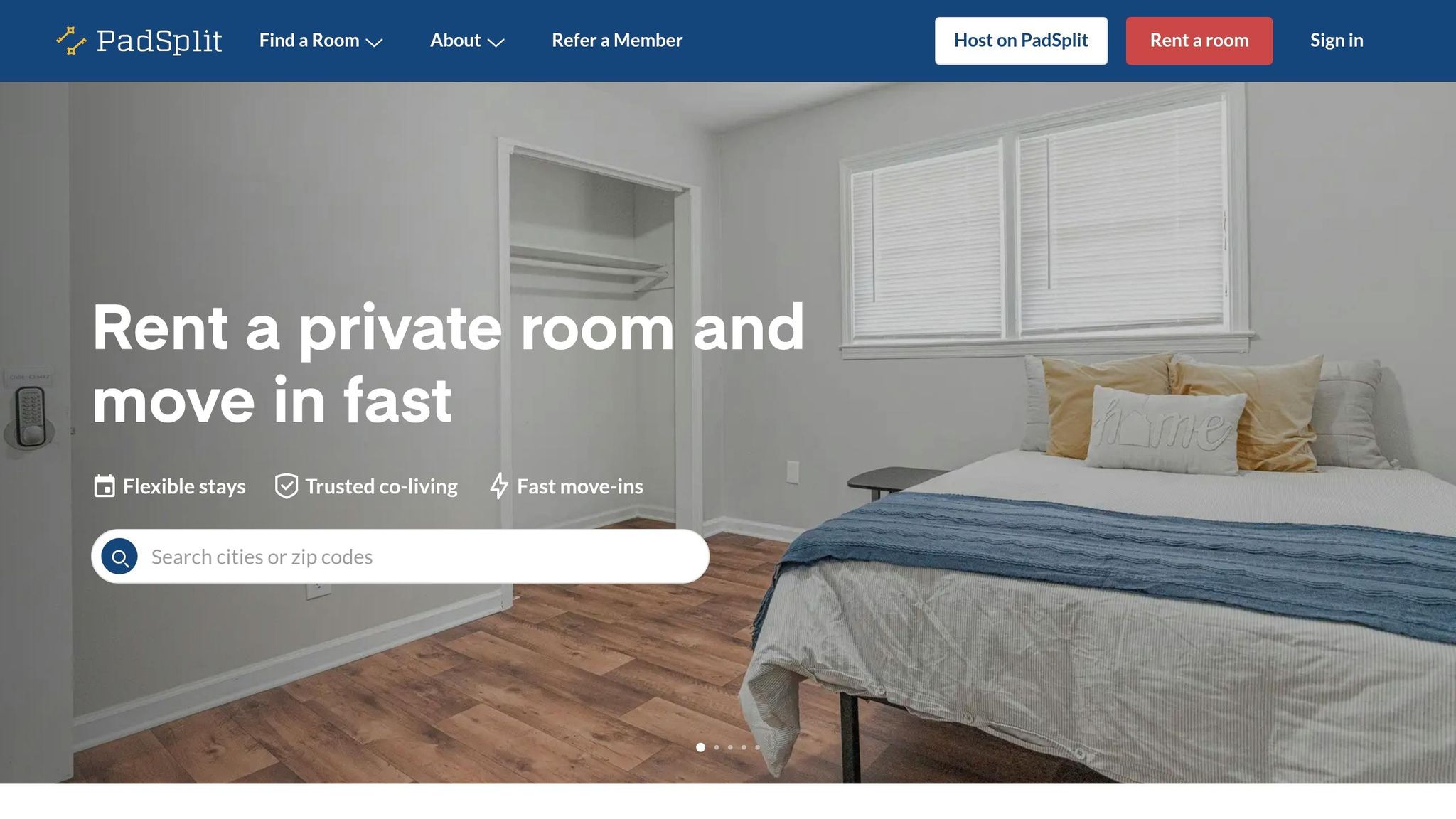
PadSplit properties, where individual rooms are rented within a shared home, require a completely different approach. Managers oversee shared utilities like water, electricity, and waste services. Financial tracking becomes critical, focusing on net operating income and cash flow to meet investment targets. Additionally, fostering harmony among residents sharing common spaces calls for a unique set of management skills.
Adapting strategies to fit each property type ensures smooth operations while meeting the demands of Jacksonville’s diverse rental market.
Why Work with 1 Realty Management in Jacksonville
1 Realty Management blends deep local expertise with flexible service options designed to meet the needs of various property types. Jacksonville’s rental market comes with its own set of challenges – like neighborhood-specific pricing and Florida’s legal nuances – making specialized knowledge a must for property owners.
Available Service Options
1 Realty Management offers three distinct service plans to cater to different landlord needs:
- Standard Property Management: This plan takes care of the essentials, including marketing, tenant screening, rent collection, coordinating maintenance, financial reporting, and even handling evictions.
- Tenant Placement Only: For landlords who prefer to manage their properties themselves, this option focuses solely on finding and screening tenants and executing leases. Once the tenant moves in, the landlord takes over.
- PadSplit Management: Designed specifically for rent-per-room properties, this plan covers tenant placement, rent collection, and maintaining shared spaces.
Each service plan is backed by the company’s in-depth understanding of Jacksonville’s rental market.
Local Knowledge of Jacksonville Rentals
Setting the right rent price in Jacksonville isn’t just about crunching numbers – it requires a solid grasp of the local market. Managers at 1 Realty Management use their expertise to price properties competitively while ensuring landlords maintain steady cash flow. For instance, pricing strategies for a three-bedroom home can vary significantly between neighborhoods, depending on local demand and conditions.
The company’s established network of trusted Jacksonville contractors ensures that repairs and maintenance are handled quickly and reliably. In Florida’s warm climate, timely repairs are especially important to keep properties in excellent condition. Additionally, staying informed about local regulations helps landlords avoid legal troubles.
Conclusion: Benefits of Hiring a Property Manager
Hiring a property manager can transform property ownership into a source of passive income. By taking over tasks like marketing vacant units, collecting rent, and addressing tenant concerns, property managers free up owners to focus on other priorities or even manage their investments from afar. This hands-off approach eliminates the day-to-day headaches, allowing owners to concentrate on long-term investment strategies.
Property managers bring local market knowledge and established vendor connections to the table. This helps them set competitive rent prices and arrange for cost-efficient repairs. They also implement strategies to retain tenants, which reduces turnover expenses like deep cleaning, repainting, and changing locks.
Staying up-to-date on Florida’s landlord-tenant laws and federal Fair Housing regulations is another key advantage. Property managers handle tricky processes such as managing security deposits, terminating leases, and navigating evictions, reducing the risk of legal issues for owners. This is especially important in Jacksonville, where local rules require careful attention. Their legal expertise ensures smooth operations and minimizes potential liabilities.
Although management fees are an expense, they come with a significant upside: owners avoid the legal and payroll obligations tied to employing on-site staff, as property management firms operate as independent contractors.
With professional management, properties stay well-maintained, financially sound, and compliant with regulations. Additionally, detailed financial records provided by managers simplify tax preparation and budgeting. In Jacksonville’s competitive rental market, these advantages highlight the value of entrusting your property to a skilled management team.