
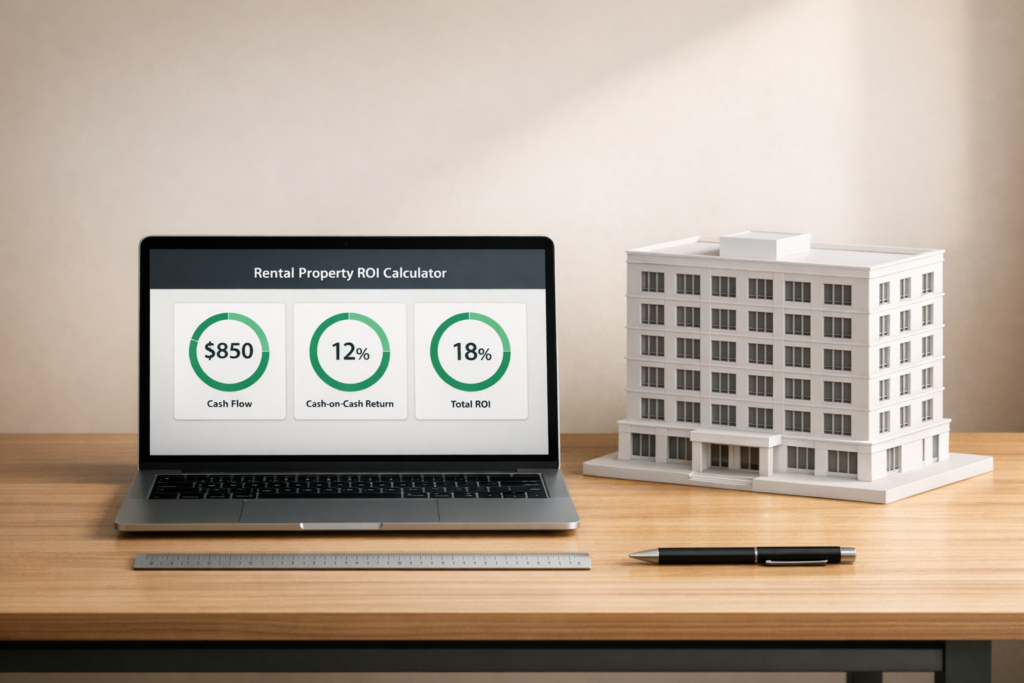
Smarter Rental Analysis for Real Investors
A good rental property ROI calculator helps you move beyond rough estimates and look at the numbers the way an investor should. Instead of focusing only on monthly rent, this tool brings together purchase costs, financing, vacancy, operating expenses, and resale assumptions so you can evaluate the full picture.
See Cash Flow Before You Buy
For many landlords, the first question is simple: will this property actually produce positive cash flow? By factoring in mortgage payments, taxes, insurance, maintenance, HOA fees, management, and owner-paid utilities, the calculator shows how much income may be left each month after the bills are covered.
Measure Returns With More Context
This rental property ROI calculator also helps you estimate first-year return, cash-on-cash return, and total profit over your planned holding period. That makes it useful for comparing multiple deals, testing different down payment levels, or adjusting rent growth and appreciation assumptions.
Plan the Exit, Not Just the Purchase
A strong investment property calculator should also account for what happens when you sell. With projected appreciation, selling costs, and remaining loan balance included, you can get a clearer view of net proceeds and long-term return potential before making a decision.
FAQs
What does this rental property ROI calculator include?
It covers the parts of a deal that matter most to landlords and investors: purchase price, down payment, closing costs, renovation costs, loan terms, rent, other income, vacancy, operating expenses, growth assumptions, and an exit scenario. From there, it calculates total cash invested, mortgage payment, effective income, cash flow, cash-on-cash return, and total ROI over the holding period. That gives you a more complete picture than looking at rent alone.
What is cash-on-cash return, and why does it matter?
Cash-on-cash return measures the annual pre-tax cash flow you expect to earn compared with the actual cash you put into the deal. In simple terms, it tells you how hard your invested cash is working in year one. Investors like it because it’s easy to compare across properties, especially when financing structures differ. It doesn’t replace deeper analysis, but it’s one of the fastest ways to judge whether a rental property deserves a closer look.
How are vacancy, NOI, and sale proceeds handled?
Vacancy reduces your potential rental income by the percentage you enter, which helps create a more realistic estimate instead of assuming full occupancy every month. NOI, or net operating income, is calculated from effective income minus operating expenses, excluding the mortgage, so you can evaluate the property’s performance on its own. For the exit scenario, the tool projects a future sale price using appreciation, subtracts selling costs, estimates the remaining loan balance from amortization, and then shows your net sale proceeds and total profit.