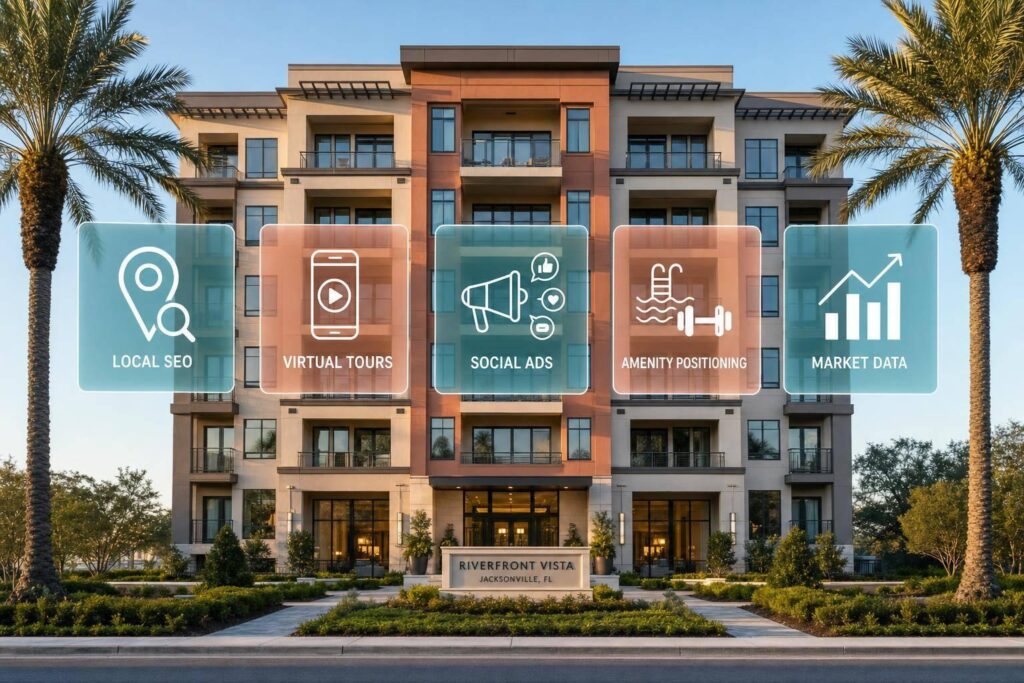
If I want to fill multi-family units in Jacksonville, I need five things working together: local search visibility, strong photos and video, social ads with review management, amenity-focused messaging, and data-based pricing.
Here’s the short version: Jacksonville renters do not all search the same way, and they do not all care about the same features. With median rent at $2,400 in the Jacksonville/St. Johns County area and a 6.3% vacancy rate, I need to market each property based on its area, renter type, and lease-up pace.
The five strategies are:
- Local online visibility to show up in neighborhood-based apartment searches
- Visual tours and digital leasing tools to turn clicks into tours and applications
- Targeted social ads and review management to stay in front of renters and build trust
- Amenity and lifestyle positioning to match the right features to the right renter
- Market data for pricing and timing to cut vacancy days and protect rent
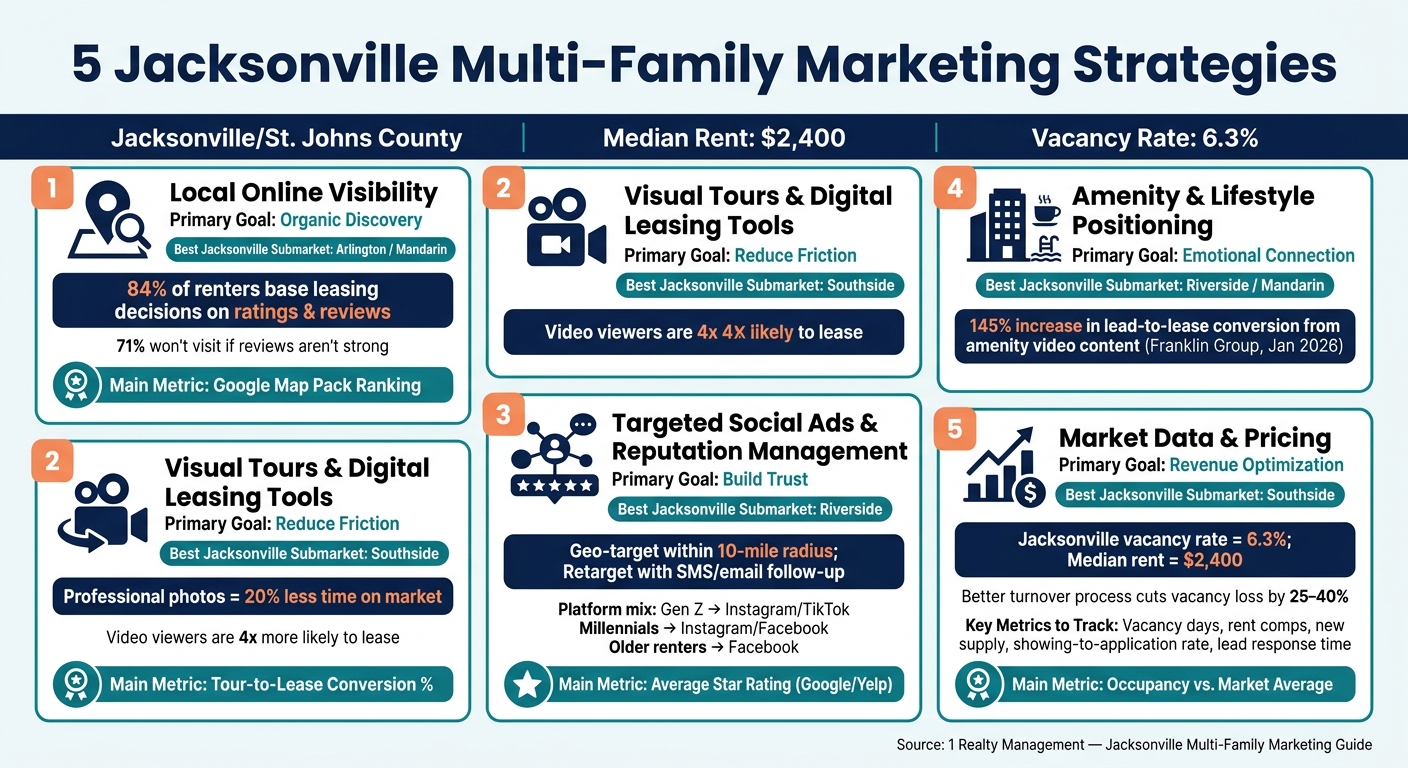
5 Jacksonville Multi-Family Marketing Strategies: Goals, Use Cases & KPIs
Quick Comparison
| Strategy | What I use it for | Best result to watch |
|---|---|---|
| Local online visibility | Get found in Jacksonville apartment searches | Google Maps and local lead volume |
| Visual tours and digital tools | Reduce drop-off after the click | Tour-to-lease rate |
| Social ads and reviews | Bring back visitors and build confidence | Review score and response rate |
| Amenity positioning | Match the property to renter needs | Lead-to-tour rate |
| Market data and pricing | Set rent and timing based on the market | Vacancy days and occupancy |
In short: if I market the same way in Riverside, Mandarin, Downtown, and Southside, I will miss people. This article lays out a simple five-part system I can use to lease faster and make better pricing calls.
sbb-itb-73b3b1a
1. Build Local Online Visibility for Jacksonville Apartment Searches
Start with local SEO. Claim your Google Business Profile, and keep your name, address, and phone number the same across your website, directories, and social profiles. Then work Jacksonville neighborhood terms into your pages and listings. Done well, this helps your property show up in the local map pack and on Google Maps, right where active renters are looking.
Jacksonville’s rental market isn’t one big bucket. Someone searching for "pet-friendly apartments in San Marco" is looking for something very different from someone typing "duplex near Southpoint Jacksonville." Those longer, more specific searches tend to bring in better-fit prospects in smaller submarkets. And in many cases, those renters are closer to booking a tour and submitting an application than people using broad search terms.
Reviews shape the first impression too. 84% of residents make leasing decisions based on ratings and reviews, and 71% won’t visit a property if the reviews aren’t strong. That’s a big deal. A prompt, professional reply to feedback shows people the property is managed well and that someone is paying attention.
Listing syndication tools can push one vacancy to many rental sites at the same time, so you don’t have to post the same unit by hand over and over. That extra visibility matters even more when you need to fill several units on a short timeline.
Once renters land on the listing, the next step is simple: give them what they need to act. Strong photos, virtual tours, and fast digital leasing tools help move them from browsing to applying.
2. Use Visual Tours and Digital Leasing Tools
When renters open your listing, you have only a few seconds to hold their attention. After the click, visuals do the heavy lifting. They turn casual interest into tours and applications, and they help every other marketing channel pull more weight.
Listings with professional photography spend an average of 20% less time on the market. Prospects who watch even one property video are 4x more likely to lease. That’s a big gap, and it shows how much strong visuals matter.
360-degree walkthroughs make it easier for renters to see the floor plan, lighting, and overall condition of a unit, which helps build trust. For relocating Jacksonville renters, virtual tours and pre-recorded walkthroughs act like a 24/7 leasing tool. People can view the property on their own time, compare options, and make decisions faster, which can cut empty days.
Video also works well beyond the listing page. Video engagement paired with personalized follow-up increased lead-to-lease conversion by 145%. In plain English: a good walkthrough doesn’t just look nice. It can help move prospects closer to signing.
A simple setup can go a long way:
- Reuse one walkthrough across listings, social posts, and follow-up texts
- Add mobile applications, self-scheduling, e-signatures, and chat tools to help renters move from interest to lease with less friction
Once visuals and digital tools grab attention, targeted ads and strong reviews help keep qualified leads coming in.
3. Run Targeted Social Media Ads and Manage Your Online Reputation
Paid social ads and strong reviews can help Jacksonville properties reach renters who are ready to move. Once good photos, video, and leasing tools bring people in, social ads help you stay in front of prospects who didn’t convert the first time.
Reviews play a big part here. Ask for feedback after a good moment, like a smooth move-in or a maintenance issue that got fixed without hassle. Then reply to every review within 24 hours. That kind of fast, professional response matters, especially with negative feedback. It shows prospects that the property is run well and that staff pays attention.
Not every social platform reaches the same renter, so your ad mix should match your audience. Gen Z tends to respond better to Instagram and TikTok. Millennials are active on both Instagram and Facebook. Older renters lean more toward Facebook.
For Jacksonville properties, it also helps to keep your targeting tight. Focus on nearby renters who can tour soon, such as people within a 10-mile radius of Southpoint or Downtown. You can narrow that audience even more with:
- Geo-targeting
- Income filters
- Recent-mover signals
These filters help you reach renters who are actively looking. Retargeting adds another layer by putting your property back in front of people who visited but didn’t take action on that first visit. To make that traffic more likely to convert, pair retargeting with immediate SMS or email follow-up. You can also use real resident review snippets in your ad creative to build trust before a prospect even clicks.
For larger portfolios, a single paid social setup can help fill vacancies across multiple properties, while a CRM keeps lead follow-up organized. Then the focus shifts to pricing and timing, because that’s often what turns interest into signed leases.
4. Position Amenities and Lifestyle to Match Jacksonville Renters
Amenities and lifestyle signals help Jacksonville renters figure out, fast, whether a property fits the way they live. And in Jacksonville, that usually comes down to one thing: matching the right features to the right submarket.
Renters in Jacksonville don’t all want the same setup. As Livingintown Realty Group puts it:
"Properties near Jacksonville’s thriving downtown may focus on attracting young professionals and retirees, while those further from the city center may cater to families or university students."
That split should shape how you market each property. Communities near downtown can lean into shared workspaces, modern fitness centers, and smart home tools like keyless entry or smart thermostats. In more suburban areas, package locker systems and green space may matter more. And because Jacksonville gets hot and humid, energy-efficient appliances and dependable HVAC systems aren’t just nice extras. They’re practical selling points.
Don’t just name amenities. Show them in action. Amenity videos can make features feel concrete, while neighborhood videos help renters picture daily life nearby, from bars and restaurants to parks. Highland Row did this with short videos that showed prospects Char restaurant, Hotworx studio, and Smoothie King all within walking distance.
The numbers back this up. In a January 2026 case study, the Franklin Group put its marketing focus on video content showing property amenities and layouts. The result was a 145% increase in lead-to-lease conversion rates. At the same time, 84% of residents make their final leasing decisions based on online ratings and reviews. A short walkthrough of the gym, pool, or shared workspace, paired with clips from the surrounding area, can help prospects get comfortable with a property before they ever step on-site.
For owners with several Jacksonville properties, AI-powered chatbots can handle amenity questions and book tours after hours. Then, after a tour, a personalized follow-up can keep things moving by recapping the features that mattered most to that prospect, whether that’s smart thermostats, package locker systems, or green space.
When amenity positioning is clear, prospects can sort themselves faster. That makes pricing and timing calls easier too.
5. Use Market Data to Set Pricing, Timing, and Leasing Decisions
Once the property is positioned and listed, market data should drive the next moves: when to adjust rent, when to turn ads on, and when to push applications.
For multi-family owners, this comes down to using numbers instead of gut feel. Jacksonville’s 6.3% rental vacancy rate means pricing has to be tight and turnover has to move fast. A better turnover process can cut vacancy loss by 25% to 40%. That’s not a small swing.
One metric tells you a lot right away: vacancy days. If units are sitting too long, your marketing may be off, your rent may be too high, or both. It helps to watch nearby rents, new deliveries, and amenity packages at the submarket level so your pricing doesn’t drift out of line.
Then look at how you stack up against nearby properties. Are your rents in range? Are you replying to leads fast enough? Are prospects booking showings but not applying? That’s where the leasing funnel starts to tell the real story.
Track key numbers like:
- Vacancy days
- Nearby rent comps
- New supply in the area
- Showing-to-application rate
- Lead response time
That last part matters more than many owners think. If your showing-to-application rate is low, prospects are likely dropping off somewhere in the process. In plain English, that often points to weak agent follow-up, unclear pricing, or friction during showings.
Use those numbers to price and market each unit for today’s market, not last month’s. And if you manage a larger portfolio, software can help track vacancies, leads, and rent changes across properties without turning it into a spreadsheet mess.
Jacksonville Multi-Family Marketing at a Glance
Jacksonville submarkets don’t all respond to the same playbook. What works in Riverside may fall flat in Southside. That’s why this table maps each tactic to the part of the city where it tends to fit best, along with the KPI that tells you if it’s doing its job.
Use it to pair the right strategy with the right submarket, then watch the metric that lines up with your goal.
| Strategy | Primary Goal | Best Use Case in Jacksonville | Main Result | Main Metric to Track |
|---|---|---|---|---|
| 1. Local Online Visibility | Organic Discovery | Arlington/Mandarin: Established areas with high "near me" search intent. | More organic leads at lower cost. | Google Map Pack Ranking |
| 2. Visual & Digital Tools | Reduce Friction | Southside: Busy corporate professionals needing 24/7 virtual access. | Shorter time on market. | Tour-to-Lease Conversion % |
| 3. Social Media & Reputation | Build Trust | Riverside: Trendy Gen Z/Millennial renters influenced by social proof. | Higher visit rates and stronger leasing momentum. | Average Star Rating (Google/Yelp) |
| 4. Lifestyle Positioning | Emotional Connection | Riverside/Mandarin: Highlighting walkability or family-oriented amenities. | Increased resident satisfaction and renewal intent. | Lead-to-tour rate |
| 5. Market Data & Pricing | Revenue Optimization | Southside: Competitive submarkets with frequent new luxury supply. | Stronger rent and occupancy. | Occupancy vs. Market Average |
The KPI column is your gut check. If the goal is visibility, track visibility. If the goal is trust, look at review scores. If the goal is occupancy, measure occupancy against the market. Simple, but easy to miss when teams chase too many numbers at once.
Conclusion
No single tactic fills vacancies. In Jacksonville, owners get the best results when they combine these five strategies into one leasing system.
Neighborhoods may need different messages, but the same five-part setup can work across the market. The edge comes from measuring what each tactic is producing.
Watch the numbers that affect vacancy days and lease-up speed. That way, you can spot weak points early and make changes before empty days start to pile up. That’s also where outside help can make sense, especially when a portfolio needs faster follow-through.
The data tells you which channels, messages, and pricing choices are actually moving leases. If running all five strategies feels like too much on top of day-to-day operations, 1 Realty Management works with Jacksonville multi-family owners to handle property marketing and full-service property management – so the work gets done on a steady basis.
FAQs
Which strategy should I start with first?
Start with your digital foundation. It supports every other marketing effort because it helps people trust you.
Focus first on:
- Your Google Business Profile
- A professional, mobile-friendly website
- A steady process for collecting and replying to resident reviews
Once those pieces are in place, you can build on them with local SEO, content marketing, and targeted advertising.
How do I market differently by Jacksonville neighborhood?
Tailor your marketing to each Jacksonville neighborhood’s demand cycles and what local renters care about. Build location-specific website content – like neighborhood guides and local attraction pages – to support local SEO and show that you know the area well.
Your messaging should shift based on the audience. A property near military hubs won’t speak to people the same way a community near a university or along the coast will. Each area has its own pace, priorities, and appeal.
Keep your Google Business Profile and directory details consistent across the board. On social media, don’t just talk about amenities. Show the lifestyle too – the coffee shops nearby, beach access, commute convenience, walkability, and the day-to-day feel of the neighborhood.
What KPIs matter most for multi-family marketing?
Focus on KPIs tied to cost, engagement, and conversions.
The main ones are cost per lead, cost per lease, conversion rates, and the tour-to-application ratio. These numbers show whether your marketing spend is paying off and how well leads move through the leasing funnel.
It also helps to track click-through rates, time on listing pages, virtual tour engagement, and leasing timelines. Those metrics give you a clearer view of what’s landing with renters and where the leasing process may be slowing people down.