The Jacksonville rental market has shifted in 2026, with longer leasing periods, increased competition, and slight rent decreases. Here’s what you need to know:
- Rental Prices: Average rents range from $1,300 to $1,550, reflecting a 1.4% to 1.9% year-over-year decline. Single-family homes rent for $1,700 to $2,500 per month.
- Vacancy Rates: Hovering between 5% and 5.2%, with single-family homes performing slightly better at 4.9%.
- Market Trends: Renters have more options due to new developments and property conversions. This has made pricing and upkeep critical for landlords.
- Demand Drivers: Population growth, high interest rates, and Jacksonville’s affordability compared to other Florida cities continue to fuel rental demand.
- Neighborhood Insights: ZIP Code 32218 and areas like Murray Hill, Springfield, and East Arlington offer strong investment opportunities with steady rental demand.
For landlords, competitive pricing and professional property management are essential to reduce vacancies and maintain steady income in this evolving market.
Jacksonville Rental Market Statistics 2026: Prices, Vacancy Rates & Growth Trends
Jacksonville Rental Market Overview for 2026
Vacancy Rates and Market Conditions
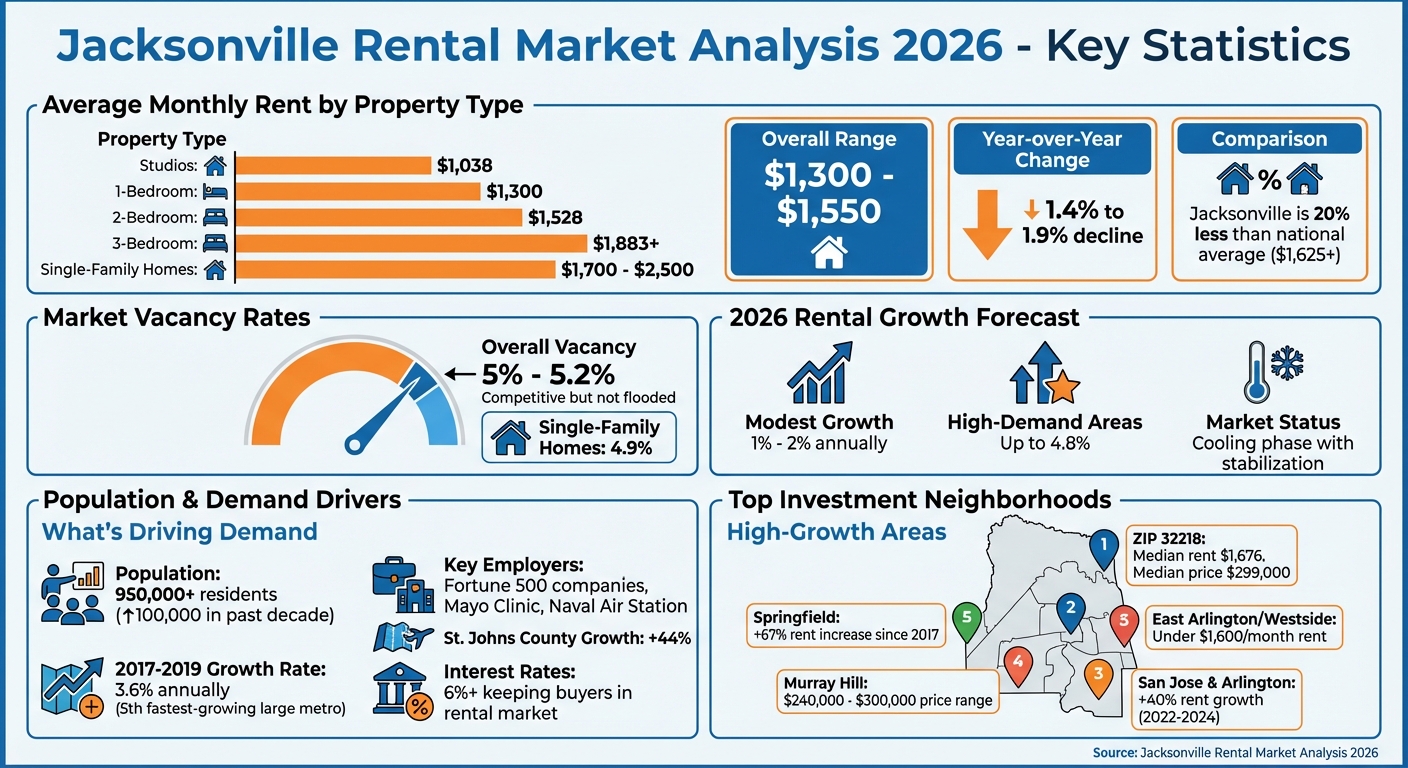
Jacksonville’s vacancy rate currently hovers between 5% and 5.2%, with single-family homes performing slightly better at 4.9%. This indicates a market that’s competitive but not flooded with options. Landlords still have opportunities to attract tenants, but they need to approach pricing and property upkeep more carefully than they might have in the past.
The dynamics are shifting. Properties priced too high risk sitting vacant for over 30 days. This extended downtime means landlords can’t afford to overprice or neglect the condition of their rentals. With new constructions and property conversions increasing available options, tenants now have more leverage when choosing a place to live.
These factors shape the current pricing landscape, offering valuable insights into the rental market’s trajectory.
Current Rental Prices
As of early 2026, average monthly rents in Jacksonville range between $1,300 and $1,550, reflecting a slight year-over-year decline of 1.4% to 1.9%. Breaking it down further, studios average $1,038, one-bedroom units go for $1,300, two-bedrooms come in at $1,528, and three-bedrooms command $1,883 or more. Single-family homes remain in high demand, with monthly rents typically ranging from $1,700 to $2,500, driven by families and prospective buyers who are unable to purchase due to elevated interest rates. In ZIP code 32254, the median rent stands at $1,676.
Compared to the national average rent, which exceeds $1,625, Jacksonville offers a more affordable option, coming in at about 20% less. Seasonal trends also play a role, with February 2026 showing lower rental rates typical of winter months. Prices are expected to rise as summer approaches, aligning with the peak moving season.
sbb-itb-73b3b1a
2026 Rental Price Projections
Expected Growth Rates and Market Stabilization
Jacksonville’s rental market is entering a cooling phase after years of sharp increases. With new apartment construction boosting inventory, renters are starting to gain more leverage in the market.
Rental prices are projected to grow modestly, around 1% to 2% annually through 2026. However, in high-demand neighborhoods – especially those near strong job hubs and with limited new development – growth could climb as high as 4.8%. This shift signals a healthier balance between supply and demand, following a period of unsustainable price hikes.
Different property types are expected to perform differently. Single-family homes are likely to retain stronger pricing power, as high interest rates continue to make homeownership less accessible. On the other hand, apartments will need competitive pricing and regular maintenance to avoid vacancies. This dynamic not only stabilizes local rental growth but also positions Jacksonville as a standout in the broader market landscape.
Jacksonville vs. National Rental Prices
Jacksonville’s moderate growth forecasts highlight its affordability and appeal, both for tenants and investors. While the national average rent sits above $1,625, Jacksonville’s average typically ranges between $1,300 and $1,550. This pricing advantage supports steady appreciation as the city’s population and job market grow, making it an attractive option for investors seeking areas with room for upward momentum.
The difference becomes even more striking when comparing Jacksonville to pricier Florida cities like Miami or Orlando. Jacksonville’s lower cost of living continues to draw residents from higher-cost markets, ensuring consistent rental demand even as the market cools. For landlords, this creates a sweet spot – affordable enough to keep attracting tenants, yet still offering potential for long-term growth.
What’s Driving Rental Demand in Jacksonville
Population Growth and New Residents
Over the past decade, Jacksonville has seen its population swell by more than 100,000 residents, surpassing 950,000 people. From 2017 to 2019, the city experienced an impressive annual growth rate of 3.6%, ranking it as the 5th fastest-growing large metro area in the U.S..
This surge includes a diverse mix of newcomers: military families stationed at Naval Air Station Jacksonville, retirees drawn to the area’s affordability, and young professionals escaping higher-cost cities. St. Johns County, in particular, has witnessed explosive growth, with its population ballooning by 44%. Jacksonville’s relatively lower cost of living compared to cities like Miami and Orlando continues to attract new residents. This steady influx fuels rental demand, even as new housing developments expand inventory. The growing population also plays a key role in shaping the rental market, dividing demand between single-family homes and apartments.
Single-Family Homes vs. Apartments
Jacksonville’s rental market is split between single-family homes and apartments, each catering to different needs. With mortgage interest rates exceeding 6% and rising home insurance costs, many would-be buyers are staying in the rental market, driving up demand for single-family homes.
These homes, offering privacy, outdoor space, and room for families, typically rent for $1,750 to $2,500 per month. On the other hand, the apartment market has seen a surge in new construction, slightly easing competition in that segment. As a result, apartment rents have dipped by 1.4% to 1.9% year-over-year, with monthly rates averaging $1,300 to $1,550. Despite this, the strongest demand remains for single-family homes, where supply continues to lag behind demand.
Job Market and Economic Growth
Jacksonville’s thriving economy plays a major role in sustaining its rental demand. The city is home to Fortune 500 companies and major employers like the Mayo Clinic, Naval Air Station Jacksonville, and CSX Corporation. Florida’s pro-business environment, along with the absence of state income tax, has made Jacksonville an attractive destination for corporate relocations and expansions, particularly in sectors like healthcare, logistics, and finance.
The University of North Florida also contributes to housing demand, particularly for student rentals. Corporate growth further drives the need for housing, as Jeff Riber notes:
As Jacksonville grows into being a major US city, the demand for its real estate has come along for the ride. Many businesses are also relocating a portion of their operations (or even their full headquarters) which is bringing new jobs and more people seeking housing.
High-Growth Neighborhoods in 2026
ZIP Code 32218 Market Analysis
ZIP Code 32218 offers a steady market with consistent rental demand and accessible entry points for investors. The median sold price is $299,000, while the median rent averages $1,676 per month. Located near Jacksonville International Airport and key logistics hubs, this area attracts local workers, making it a reliable choice for renters.
The Northside is undergoing significant new construction, with former timberland being converted into residential neighborhoods. This transformation positions the area as one of the more affordable options in the Jacksonville metro, especially when compared to coastal or historic districts. For instance, in March 2026, a 3-bedroom, 1-bath home at 10242 Haverford Rd was purchased as a "Quick Flip" investment for $119,999 ($96 per square foot) after just 23 days on the market. This highlights the potential for value-add opportunities in the area.
Despite strong rental demand, properties in ZIP Code 32218 typically spend 276 days on the market, reflecting a slower sales pace. However, the sale-to-list ratio sits at 100.0%, meaning homes sell at asking prices, albeit with longer market times.
Turnkey Investment Areas
Other neighborhoods in Jacksonville also present strong opportunities for turnkey rental investments. Murray Hill and Springfield offer homes priced between $240,000 and $300,000, making them more affordable than many established historic districts. Notably, Springfield has experienced a 67% increase in rents since 2017, while San Jose and Arlington saw nearly 40% rent growth from 2022 to 2024.
Affordable markets like East Arlington, the Westside, and Orange Park feature median home prices ranging from $240,000 to $280,000, appealing to military families and local workers. Rental rates in these areas remain under $1,600 per month, ensuring consistent demand for workforce housing. Meanwhile, neighborhoods like Southside and San Marco attract young professionals with their convenient commutes and lifestyle amenities. Additionally, master-planned communities such as Silverleaf and Nocatee in St. Johns County continue to thrive as regional favorites, driving demand with their top-tier amenities.
February 2026 Jacksonville Rental Market Insights
How to Maximize Rental Income with 1 Realty Management
Jacksonville’s rental market in 2026 is shaped by vacancies and competitive pricing, making professional management a crucial tool for landlords aiming to boost their rental income.
Full-Service Property Management Benefits
In Jacksonville, vacancies are the biggest financial drain for landlords. For example, a property renting at $2,000 per month loses that same amount for every month it remains unoccupied. In contrast, professional management fees typically cost around $200 per month, making them a far smaller expense by comparison. Pricing a property too high can extend vacancy periods, with leasing now taking 2–3 weeks when prices are misaligned with the market. Properties listed for more than 14 days often lose their appeal, attracting less qualified applicants.
Professional property managers address these challenges by using high-quality photography, setting market-appropriate pricing, and responding quickly to tenant inquiries. In today’s market, where new apartment construction has added more inventory, tenants often apply to the property manager who responds first.
"Vacancy is your biggest expense. Not management fees. Not maintenance. Not marketing. Vacancy." – Noble Neighbors Property Management
Beyond minimizing vacancies, full-service management ensures landlords stay compliant with Fair Housing laws through standardized and well-documented tenant screening processes. This is particularly important as Jacksonville rents have decreased by 1.4% to 1.9% year-over-year in early 2026, making it critical to avoid pricing errors and legal risks that could harm rental income.
1 Realty Management builds on these benefits by offering customized plans designed to meet the unique needs of each property.
Property Management Plans by Property Type
1 Realty Management provides four distinct plans tailored to different property types and landlord preferences.
- Standard Property Management Plan: This comprehensive option covers everything from marketing and tenant screening to rent collection, maintenance coordination, financial reporting, and even eviction handling.
- Tenant Placement Only Plan: Ideal for landlords who prefer to manage daily operations themselves, this plan focuses solely on finding and vetting qualified tenants and finalizing leases.
For landlords with larger properties, there are specialized options:
- Apartment Complex Plan: Designed to optimize rent collection and adapt to Jacksonville’s evolving rental trends.
- PadSplit Management Plan: Perfect for single-family homes, this plan takes advantage of strong demand in the rental market, driven by high interest rates that keep many would-be buyers renting instead.
Each plan is structured to help landlords navigate the challenges of Jacksonville’s rental market while maximizing their income potential.
Conclusion
By 2026, Jacksonville’s rental market has become more challenging, requiring landlords to focus on strategic pricing and effective marketing. Rental prices have dropped by about 1.4% to 1.9% compared to early 2025, and properties that used to rent within 7–10 days are now taking 2–3 weeks or longer if priced too high. With vacancy rates hovering between 8% and 12%, landlords must adopt precise strategies to avoid costly downtime.
Consider this: leaving a $2,000 property vacant for just one month can cost more than an entire year of management fees. The competition is fierce, with increased inventory from new construction and homeowners converting their properties into rentals, giving tenants more options than ever. In this environment, pricing accurately and presenting properties in their best light are absolutely essential.
Staying ahead means understanding these trends and adapting to them. Property investors need to rely on data-driven strategies to make informed decisions about pricing, marketing, and tenant placement. Outdated methods won’t cut it anymore. Managing these challenges effectively requires a proactive approach.
To meet these demands, landlords can turn to 1 Realty Management for customized property management solutions. Their services – ranging from Standard Property Management to specialized options like PadSplit and Apartment Complex management – are designed to help landlords reduce vacancies, optimize rental income, and achieve lasting financial success in Jacksonville’s shifting rental landscape.
FAQs
Will Jacksonville rents rise again after 2026?
Yes, rents in Jacksonville are expected to rise after 2026. This increase will likely be fueled by growing demand and continued development in prominent neighborhoods, reflecting broader market trends and economic expansion in the area.
How can landlords reduce vacancy in 2026?
Landlords looking to minimize vacancies in 2026 should start by setting rental prices that align with local market trends and neighborhood-specific rates. Pricing your property competitively ensures it attracts attention from potential tenants while staying fair for the area.
On top of that, using targeted marketing strategies can make a big difference in finding tenants quickly. Highlight the features of your property that renters in your area are most likely to value – whether it’s proximity to schools, modern amenities, or spacious layouts. Tailoring your approach to what renters want can help your property stand out in a crowded market.
Which Jacksonville neighborhoods look best for rentals in 2026?
Jacksonville’s rental market is set to thrive in 2026, with certain neighborhoods standing out due to strong growth and rising demand. Based on local market trends, these areas are expected to present great opportunities for landlords and tenants alike, thanks to projected increases in rental demand and ongoing development.